
News / Ball Python Stuck Shed: Causes and Safe Removal
Ball Python Stuck Shed: Causes and Safe Removal
- Most stuck sheds trace back to humidity below 60% during the pre-shed window. Fix humidity first.
- Never pull stuck shed off. Use a humidity chamber (damp paper towels in a ventilated container, 20-30 minutes).
- Retained eye caps are the most concerning form. If a humidity chamber does not remove them, see a reptile vet.
- One stuck shed = humidity issue. Repeated stuck sheds = investigate mites, health, or heat source safety.
Your ball python finished shedding and there are still patches of old skin clinging to its body. This is stuck shed, and it is one of the most common issues keepers face. The good news: it is almost always preventable, and when it does happen, the fix is straightforward.
In This Guide
What stuck shed looks like
A healthy shed comes off in one continuous piece. When something goes wrong, you will see dried, papery skin still attached to the body. Common areas include the tail tip, around the eyes (retained eye caps), along the spine, and around the head.
Retained eye caps are the most concerning form of stuck shed. They look like a cloudy or dull film covering the eye. Left untreated, multiple layers of retained caps can build up and cause permanent eye damage.
Why it happens
Stuck shed comes down to one thing in most cases: humidity. Ball pythons need 60 to 80 percent humidity at all times, and they need it closer to 80 percent when they are in blue (the pre-shed phase when their eyes cloud and their colors dull).
Here are the most common causes:
- Low ambient humidity. Screen-top enclosures, dry rooms, and lack of a moisture-retaining substrate all pull humidity down below what your snake needs.
- Dehydration. A snake without access to clean water or one who has gone too long without drinking will struggle to shed cleanly.
- Mites. An active mite infestation irritates the skin and disrupts the shedding process. If you are seeing stuck shed alongside small moving dots near the eyes, vent, or water bowl, mites are the likely cause.
- Handling during blue. Disturbing a snake in the pre-shed phase adds stress and can lead to a partial or incomplete shed.
- Inadequate rough surfaces. Ball pythons need something to catch the shed on as they move through their enclosure. Without hides, branches, or textured decor, the skin has nothing to pull against.
Key Insight
Most stuck sheds trace back to humidity below 60 percent during the pre-shed window. Fix the humidity and you fix the shedding.
How to safely remove stuck shed
Do not pull stuck shed off a ball python. The old skin is bonded to the new skin underneath, and pulling can tear living tissue and create wounds prone to infection.
Humidity chamber method (recommended)
Get a ventilated plastic container
Take a plastic container large enough for your snake to move around in. Drill or melt small air holes in the lid for ventilation.
Line with damp paper towels
The towels should be warm to the touch, not hot. Damp, not soaking. You want humidity, not standing water.
Place the snake inside for 20-30 minutes
Secure the lid. The confined, humid space softens the retained skin without the stress of sitting in water.
Let the snake do the work
After the session, the retained skin should be soft enough to come off on its own as the snake moves. If small patches remain, gently help with a damp cloth.
This method works better than soaking because the snake stays in a confined, humid space without the stress of sitting in water. Ball pythons are not aquatic. They tolerate water, but a humidity chamber mimics their natural microclimate and keeps them calmer.
What about soaking?
Soaking in lukewarm water is a common recommendation, but it is not ideal. Most ball pythons find it stressful. The water cools quickly, and a stressed snake is less likely to shed cleanly. A humidity chamber achieves the same softening effect without the downsides.
If you do soak, keep the water level at the bottom third of the snake's body. Lukewarm, not warm. Ten to fifteen minutes maximum. Stay in the room.
Stuck shed is a symptom, not a diagnosis. Fix the environment, not the shed.
Dealing with retained eye caps
Retained eye caps need extra care. Never try to peel or pick them off with tweezers. One wrong move and you can damage the spectacle (the clear scale protecting the eye) or the eye itself.
Start with the humidity chamber method. In most cases, the eye caps will loosen and come off on their own. If they persist after two humidity sessions, consult a reptile veterinarian. A vet can safely remove retained caps under magnification.
Check your shed skins after every shed cycle. The eye caps should be visible as two small, clear circles on the head of the shed. If they are missing from the shed skin, they are still on the snake.
Prevention is the real answer
Treating stuck shed is simple. Preventing it is better. Here is what to dial in:
- Maintain 60 to 80 percent humidity. Use a digital hygrometer, not an analog dial. Place it at substrate level where your snake spends its time.
- Bump humidity during blue. When your snake enters the pre-shed phase, raise humidity closer to 80 percent. A damp layer of sphagnum moss in one hide works well.
- Use moisture-retaining substrate. Coconut husk, cypress mulch, or a bioactive mix all hold humidity far better than aspen or paper towels.
- Provide a humid hide. A hide with damp sphagnum moss gives your snake a microclimate to retreat to. This single addition prevents most stuck shed issues.
- Keep water fresh. A clean water bowl large enough for the snake to soak in (if it chooses) supports hydration and ambient humidity.
The pattern with shedding issues is predictable. Once you know a snake struggles with sheds, you can log the cycle length, note what humidity levels produced clean sheds, and adjust before the next blue phase starts.
THE RACK's Shed Tracker lets you log every shed cycle with dates, completeness, and notes. When you see a pattern forming, you can intervene before the next shed goes bad instead of reacting after.
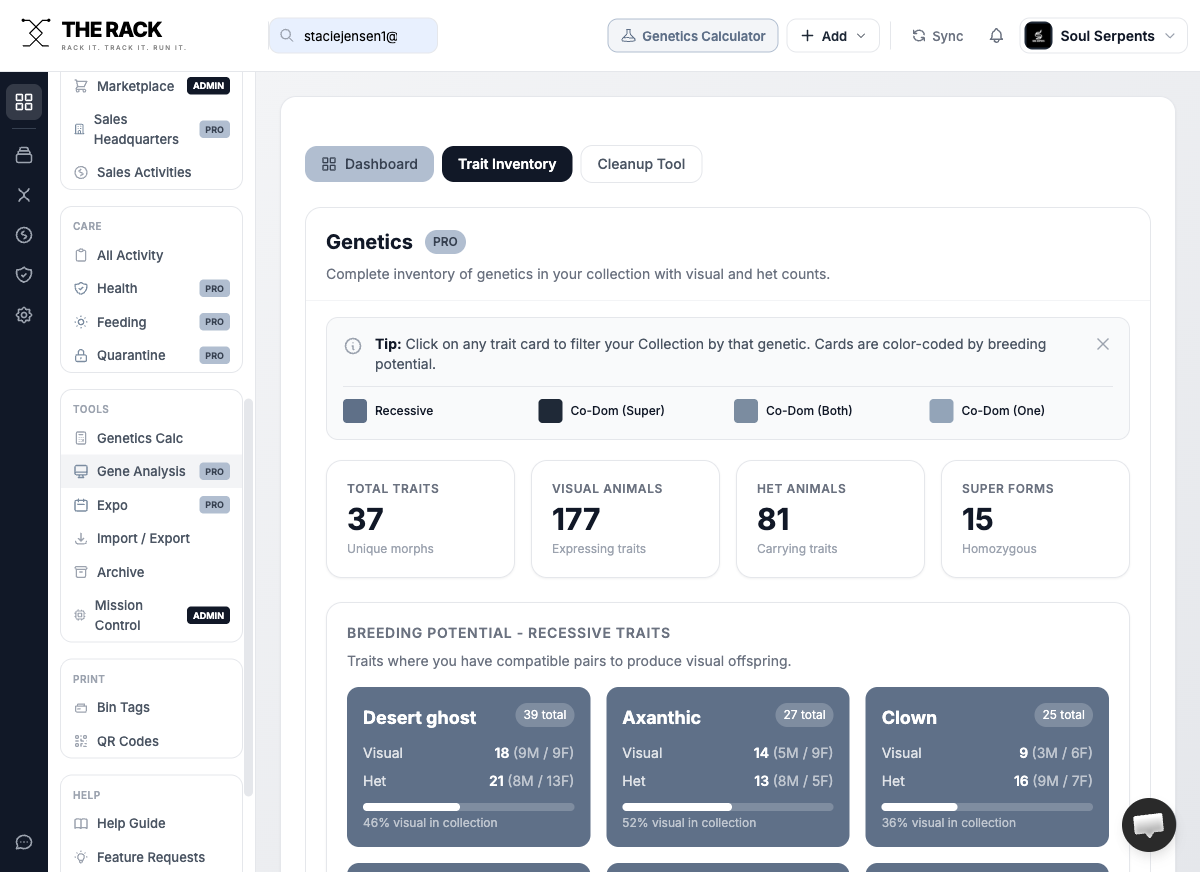
Want to catch stuck shed before it happens?
Log every shed cycle. Spot the pattern.
THE RACK's Shed Tracker records dates, completeness, and notes for every shed so you see trends forming across your collection.
See THE RACKWhen stuck shed signals a bigger problem
Occasional stuck shed in a properly maintained enclosure is not a crisis. It happens. But repeated stuck sheds, especially when humidity is dialed in, can point to underlying health issues.
- Mites. Check around the eyes, heat pits, and vent. Check the water bowl for tiny dark specks. Mites cause chronic shedding problems until they are eliminated.
- Respiratory infection. If stuck shed coincides with wheezing, mucus, or open-mouth breathing, the snake needs veterinary attention.
- Nutritional deficiency. Snakes on a poor diet or those refusing food for extended periods can have skin health decline. Consistent feeding with properly sized prey supports healthy sheds.
- Burns. Contact with an unprotected heat source damages skin and causes localized shedding problems. Always use a thermostat with heat mats and bulbs.
Quick Reference
One stuck shed = adjust humidity and provide a humid hide.
Repeated stuck sheds = investigate mites, health, and heat source safety.
The shed checklist
After every shed, run through this:
- Did the shed come off in one piece?
- Are both eye caps present on the shed skin?
- Is the tail tip clear?
- Is there any retained skin around the head or along the body?
If the answer to any of those is no, address it with a humidity chamber and then look at your enclosure setup to prevent it next time. Log the result so you have a record of which animals shed cleanly and which need extra support.
Keeping a written record matters more than most keepers realize. When you can look back at six months of shed data and see the exact conditions of every cycle, you stop guessing and start managing. You know which animals need a humidity bump during blue. You know which ones shed like clockwork with no intervention.
This is the difference between reacting to problems and preventing them.
Content verified against THE RACK breeding database. Shedding protocols sourced from active keeper and breeder programs. Last reviewed April 2026.
Built by a Breeder
Stop guessing.
Start logging every shed.
Shed tracking, health logs, feeding schedules, and collection management. All in one place.
See THE RACKFree for up to 5 animals. Keeper $10/mo. Breeder $20/mo. 7-day money-back guarantee.