
News / Ball python habitat setup guide from a breeder
Ball python habitat setup guide from a breeder
- Designer morphs combine multiple genes to produce visual results impossible from any single gene. The best combos are intentional, not accidental.
- Rarity is driven by odds, not demand alone. A 5-gene combo with a 1-in-256 probability per clutch is rare by math.
- Visual longevity separates good designer morphs from great ones. How a snake looks at two years matters more than how it looks at hatch.
- A genetics calculator shows probability outcomes before you commit to a multi-season project.
In This Guide
The ball python morph market has thousands of named combinations. Most are forgettable. The ones that command attention and hold value share specific traits: intentional gene stacking, high contrast, clean pattern definition, and visual quality that persists as the animal matures. This guide breaks down what makes a morph "designer," which combinations stand out, and how to build a multi-gene project with purpose.
What Makes a Morph "Designer"
A designer ball python is a multi-gene combination that produces a visual result impossible from any single gene alone. The term "designer" is not about rarity or value. It is about intentional gene stacking. A Pastel is a morph. A Pastel Clown is a designer morph. The distinction is in the number of genes working together and the visual result of their interaction.
The best designer projects start with a clear genetic goal. The breeder knows which genes interact to produce the target visual, runs the probabilities, and commits to a multi-season plan. Accidental multi-gene hits from a holdback bin do not count as a project. They count as luck.
What separates a breeder producing designer morphs from one producing random combos is planning. The genetics have to be mapped before the first pairing happens.
The Distinction
A designer morph is not a random combination. It is an intentional gene stack where the interaction produces a visual that no single gene can achieve alone.
Planning a designer project?
Run the Probabilities. Plan the Project.
THE RACK's genetics calculator shows offspring odds for any pairing. Know the math before committing to a multi-season build.
See THE RACKStandout Multi-Gene Combinations
Not every gene combination produces something worth pursuing. The market has hundreds of named combos, and most of them are forgettable. The ones that stand out share specific traits: high contrast, clean pattern, and visual impact that holds up as the animal matures.
High-Contrast Foundations
- Axanthic + Desert Ghost. Removes warm tones entirely while boosting brightness. The grayscale palette ages in silver instead of brown. One of the strongest foundations for long-term visual quality.
- Clown + Pastel. The Clown gene reduces pattern and the Pastel gene brightens what remains. The result is a clean, high-contrast animal with reduced pattern noise.
- Leopard + Fire. Fire adds brightness while Leopard adds anchoring darkness. Together they create definition that persists through maturation.
Pattern Reducers and Enhancers
- Spider + Yellowbelly. Dramatic pattern reduction with a clean dorsal stripe. The Yellowbelly gene cleans the belly and enhances overall contrast.
- Enchi + Clown. Enchi extends the golden blushing across the sides while Clown strips the pattern down to a flowing, unpatterned form.
- Black Pastel + Banana. The dark undertones of Black Pastel anchor the purple and lavender hues of Banana, creating a rich, unique color profile.
Every combination listed here was produced by breeders who ran the odds, understood the gene interactions, and committed to multi-season timelines. A genetics calculator turns the planning phase from guesswork into probability analysis.
The best designer morphs are not discovered. They are engineered.
The Math Behind Rarity
Rarity in designer morphs is a function of probability, not marketing. When a pairing involves multiple recessive genes, the odds of producing a visual with all genes expressed drop with every additional gene. A single recessive visual from a het x het pairing has a 25% chance per egg. Add a second independent recessive and the odds drop to 6.25%. A third drops it below 2%.
This is why some designer combos take multiple seasons and multiple clutches to produce. A breeder chasing a 4-gene visual with a 1-in-64 probability per egg needs volume and patience. The math does not care about your timeline. It only cares about probability.
Understanding these odds before committing to a project prevents frustration. It also explains why certain designer combos command higher prices. The cost reflects the seasons of work required to produce them, not hype.
Visual Longevity in Designer Morphs
The best designer morphs look good at hatch and hold that quality into adulthood. This is the real test. Any multi-gene combo can look stunning as a hatchling. The question is whether it still looks stunning at two years, three years, five years.
Color shift affects designer morphs the same way it affects single-gene animals. Melanin production increases with age. Genes that resist browning (Axanthic, Desert Ghost, Fire) anchor a designer project's long-term visual quality. Genes that introduce heavy warm tones can accelerate fading.
Breeders who photograph their holdbacks at regular intervals and compare visual quality over time are the ones making data-driven holdback decisions. Memory is unreliable. Photos and records are not.
Weight trends, feeding logs, and genetic records for every animal in the project give breeders the full picture when deciding which animals to pair next and which to retire from the program.
The Long View
A hatchling photo shows potential. A two-year photo shows what the genetics produce. Design for longevity, not for Instagram at pip day.
Building a Designer Project
A serious designer project is a multi-season commitment. The typical path starts with acquiring founder animals carrying the target genes (either visuals or hets), producing the first generation, evaluating offspring, and holding back the best for the next round of pairings.
The timeline depends on the gene combinations involved. A project combining two incomplete dominant genes can produce visuals in the first generation. A project stacking three recessive genes may take two to three generations before the target visual appears.
Planning tools matter here. Running the offspring probabilities for each planned pairing shows you the statistical path to the target. It also shows you which pairings are stepping stones and which are the pairings that produce the final result. A breeding pipeline that connects pairings to clutches to offspring genetics keeps the project organized across seasons.
The breeders producing the most impressive designer morphs in the industry are the ones who treat their projects like engineering programs. Clear targets. Mapped genetics. Calculated odds. Documented results. That is how the best combos get built.
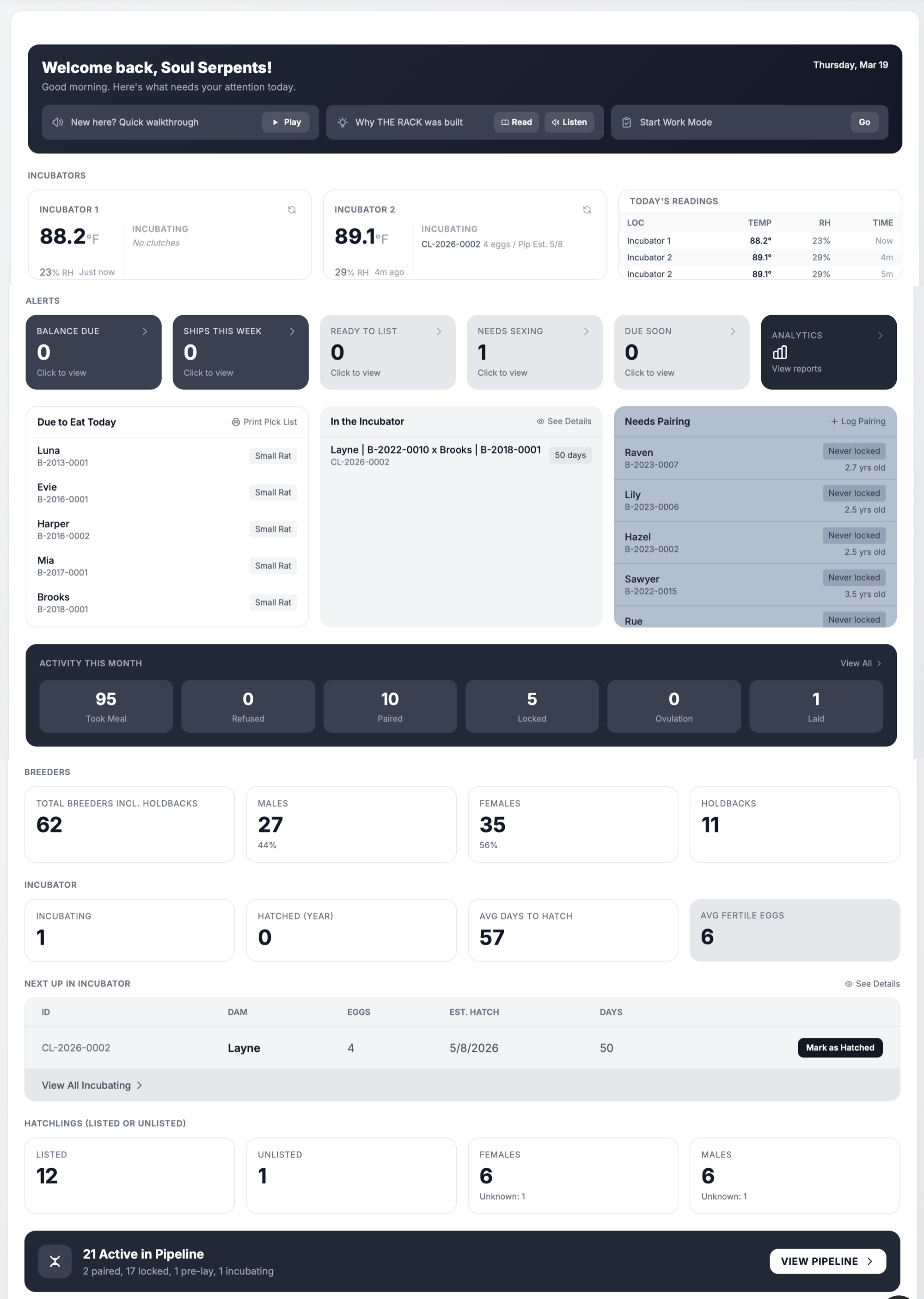
Running a designer morph project?
Map the Genetics. Track the Lineage. Build With Data.
THE RACK connects pairings to clutches to offspring genetics. See every generation of your project in one place. Plan with probabilities, not guesswork.
See THE RACKContent verified against THE RACK breeding database. Genetics probabilities and morph combinations sourced from active breeding programs. Last reviewed April 2026.
Built by a Breeder
Design the Project.
Build With Data.
Genetics calculator. Breeding pipeline. Lineage tracking. Weight trends. THE RACK was built for breeders who engineer their results.
See THE RACKFree for up to 5 animals. Keeper $10/mo. Breeder $20/mo. 7-day money-back guarantee.