
News / How to Build an Axanthic Ball Python Project
How to Build an Axanthic Ball Python Project
- Axanthic is a recessive gene. Both parents must carry it to produce visual offspring.
- Pick one Axanthic line (TSK, VPI, MJ, or Jolliff) and stay with it. Mixing lines wastes entire seasons.
- Multi-recessive Axanthic combos take four to five years of deliberate pairing. Planning before pairing is the only path.
- Every holdback, every het, and every clutch outcome needs to be documented across generations.
Axanthic ball pythons remove warm pigment entirely, producing animals that display in shades of gray, silver, and black. Building a clean Axanthic project takes years of deliberate planning, strategic pairings, and honest evaluation. This guide breaks down how to start one from scratch and what separates a focused project from random morph collecting.
Choose Your Axanthic Line
Multiple Axanthic lines exist in the market: VPI, TSK (The Snake Keeper), MJ, and Jolliff. Each produces Axanthic visuals, but they are genetically incompatible with each other. Pairing a TSK Axanthic to a VPI Axanthic produces normal-looking offspring that carry one copy of each line; neither line is expressed.
Pick one line and stay with it. Line purity protects your investment and ensures predictable results when pairing het to het or visual to visual. Mixing lines creates confusion in your records and dilutes the project.
TSK Axanthic is known for strong black-and-white contrast and reliable expression. Combined with Desert Ghost, it produces some of the cleanest grayscale visuals in the industry. That is the foundation worth building on.
CRITICAL GENETICS NOTE
Axanthic is a recessive gene. Both parents must carry the gene to produce visual Axanthic offspring. Het to het pairings yield 25% visual odds per egg.
Plan Your Foundation Stock
A strong Axanthic project starts with at least one proven visual male and two or more het females. The male carries the visual confirmation of the gene. The females carry the hidden copy that produces visuals when paired correctly.
When selecting foundation animals, evaluate three things:
- Contrast retention. Look at mature examples of the breeder's line. Animals that hold sharp black-and-white separation past their second year are preferable to those that brown out early.
- Feeding consistency. Reliable eaters produce reliable breeders. Ask for feeding records before purchasing.
- Lineage documentation. Every animal should come with verified parentage. If the breeder cannot provide sire and dam genetics, the het status is unverified and risky.
Use a genetics calculator to preview offspring probabilities before committing to any pairing. Understanding the math prevents wasted seasons.
Stack Strategically
Single-gene Axanthic visuals are beautiful, but the long-term value lives in multi-gene combinations. Desert Ghost and Axanthic together produce contrast that resists fading. Clown adds pattern complexity. Puzzle introduces controlled chaos.
The goal is to build toward double and triple recessive visuals over multiple breeding seasons. Each generation adds depth. Each holdback pushes the project closer to the target phenotype.
This kind of work requires project planning tools that track progress across seasons. Knowing which animals carry which hets, which pairings produced which clutches, and which holdbacks move the project forward is the difference between a focused project and expensive guesswork.
Recessive projects reward patience. Every season compounds.
The Multi-Season Timeline
PHASE ONE: FOUNDATION
Acquire your visual male and het females. Condition them through a full feeding season. Confirm health, weight targets, and feeding consistency before introducing any male. Females should reach proper breeding weight; rushing this step produces smaller clutches and stressed animals.
PHASE TWO: FIRST PAIRINGS
Pair your visual Axanthic male to het females. Every offspring from this pairing will carry at least one copy of the gene. Visual to het pairings produce 50% visual Axanthic and 50% het Axanthic offspring.
Hold back the best visual females. They become the engine of your project in Phase Three. Males that carry additional genes you are stacking (Desert Ghost, Clown, Puzzle) earn their spot. Everything else moves to the market to fund the next season.
PHASE THREE: STACKING
Pair your holdback visual females to males carrying the second recessive you are targeting. If the goal is Axanthic Desert Ghost, pair visual Axanthic females to Desert Ghost males. Every offspring will be double het. Hold back the best females again. Repeat.
By year three or four, you are pairing double het animals that produce visual double recessive offspring at 6.25% odds per egg. Larger clutches and multiple pairings increase the probability of hitting visuals in any given season.
Track every pairing, every clutch, and every holdback decision with breeding logs and lineage tracking. When you are managing dozens of animals across multiple generations, memory fails. Data does not.
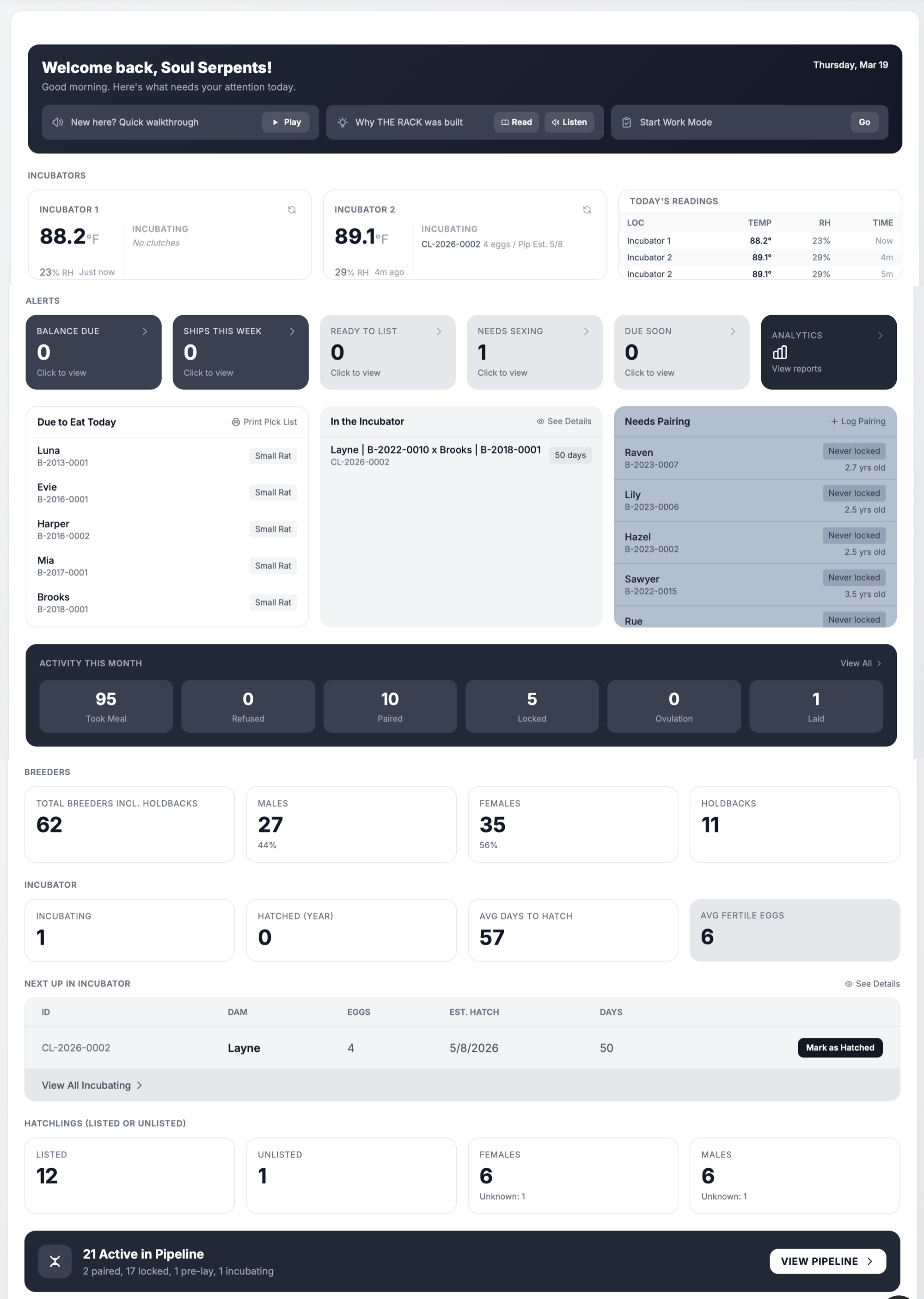
Want this exact tool for your breeding project?
Plan Across Generations.
Track Every Holdback.
THE RACK's project planner and lineage tracking keep your Axanthic project organized across seasons so no pairing decision is made from memory.
See THE RACKCommon Mistakes to Avoid
- Mixing Axanthic lines. Crossing TSK with VPI wastes a season and produces animals with no visual payoff.
- Selling holdbacks too early. The temptation to cash out is real. The best females are worth more in your rack than on the market.
- Ignoring color shift. Axanthic ball pythons darken with age. Select breeding stock from lines that retain contrast into maturity; not all do.
- Skipping records. Without documented lineage, het status is a guess. Guesses cost money when clutches produce unexpected results.
THE LONG GAME
A quad-recessive visual (Axanthic + Desert Ghost + Clown + Puzzle) can take four to five years of deliberate pairing. The breeders who reach it are the ones who planned before they paired.
What Makes It Worth the Wait
Multi-recessive Axanthic combinations are among the most valuable animals in the ball python market. They cannot be mass-produced quickly because the genetics require multiple generations to align. That built-in scarcity protects the value for breeders who do the work.
Beyond market value, there is the visual result itself. A clean Axanthic Desert Ghost Clown displays contrast and pattern complexity that stops people from scrolling. Those animals represent years of discipline made visible in a single snake.
If you are starting an Axanthic project, start with the end in mind. Pick your line. Plan your pairings. Track everything. Let every season build on the one before it.
Built by a Breeder
Plan the Project.
Track the Progress.
Genetics calculator. Project planner. Lineage tracking. Breeding logs. Everything you need to build a multi-generational Axanthic project.
See THE RACKFree for up to 5 animals. Keeper $10/mo. Breeder $20/mo. 7-day money-back guarantee.