
News / Ball Python Color Shift and Visual Longevity
Ball Python Color Shift and Visual Longevity
- Every ball python changes color with age. Melanin production increases naturally, affecting contrast and tone across all morphs.
- Selective breeding controls how aging looks, not whether it happens. The goal is grace, not immunity.
- Axanthic, Desert Ghost, Fire, and Yellowbelly resist the worst effects of color shift and hold contrast longer.
- Use a genetics calculator to preview gene combinations before committing to pairings focused on visual longevity.
In This Guide
Every ball python changes as it ages. Colors soften, patterns settle, and contrast can fade. Understanding how and why this happens separates breeders who plan ahead from those who are surprised when a sharp hatchling matures into a muddy adult. Color shift is not a defect. It is biology. And it can be managed through selective breeding.
Why Color Shift Happens
Ball pythons darken as melanin production increases with age. This is a natural process that affects every line and every morph to some degree. Environmental factors, genetics, and nutrition all influence how fast the shift shows and how far it goes.
No line is immune to color change. Every snake matures. The difference is in how much contrast holds and how gracefully the aging process presents. Some animals brown out within their first year. Others maintain clean tonal separation well into adulthood.
The genes involved matter. Axanthic removes warm pigment entirely, producing a grayscale palette. Desert Ghost enhances brightness and resists the browning effect. When combined, these two genes create contrast that stays sharper longer than either gene alone.
The Biology
Melanin production increases as ball pythons age. Selective breeding cannot eliminate color shift entirely, but it can control how it presents and how long contrast holds.
Planning pairings for visual longevity?
Preview Gene Combinations. Select With Data.
THE RACK's genetics calculator shows offspring probabilities before you commit. Pair with purpose, not guesswork.
See THE RACKEvaluating Visual Longevity
Measuring color shift requires tracking tone and contrast over years, not weeks. A hatchling photograph tells you what the animal looks like at its peak. A two-year photograph tells you what the genetics are worth.
Breeders who track mature offspring discover which pairings produce animals that hold definition over time. Those animals become breeding priority. The ones that fade or muddy get replaced. This selection pressure, applied consistently across seasons, improves the visual quality of every generation.
Records matter here. Photographing animals at hatch, at six months, at one year, and at two years creates a visual timeline that reveals the true performance of each pairing. Weight trends and feeding logs alongside those photos provide the full picture of how an animal develops.
Genes That Fight the Fade
Not all gene combinations age the same way. Some accelerate browning. Others resist it.
- Axanthic (TSK) removes warm tones entirely, leaving a black-and-white foundation that ages in grayscale rather than brown.
- Desert Ghost enhances brightness and sharpens pattern edges. It actively resists the dulling effect that melanin buildup creates.
- Fire and Yellowbelly help preserve contrast without washing out the overall pattern.
- Leopard adds darkness and definition that can anchor contrast as the animal matures.
Genes that introduce warm tones (orange, gold, brown) tend to amplify color shift. Avoiding these in a project focused on long-term clarity keeps the visual trajectory cleaner.
Use a genetics calculator to preview how different gene combinations interact before committing to a pairing. Understanding the genetic inputs helps predict the visual output years down the line.
A hatchling photo shows potential. A two-year photo shows the truth.
Improving Longevity Through Selection
Selective pairing is the primary tool for controlling color shift. Breeders who hold back animals based on how they look at maturity, rather than at hatch, build lines that age better with each generation.
The process is straightforward but requires patience. Photograph every animal at consistent intervals. Compare siblings from the same clutch at one and two years. Hold back the ones that retain the sharpest contrast. Pair those animals and repeat the evaluation with the next generation.
Over three to four generations of this selection pressure, the line's visual longevity improves measurably. This is the same principle behind any selective breeding program. The difference is that most breeders select at hatch and sell the rest without ever seeing how the animals develop.
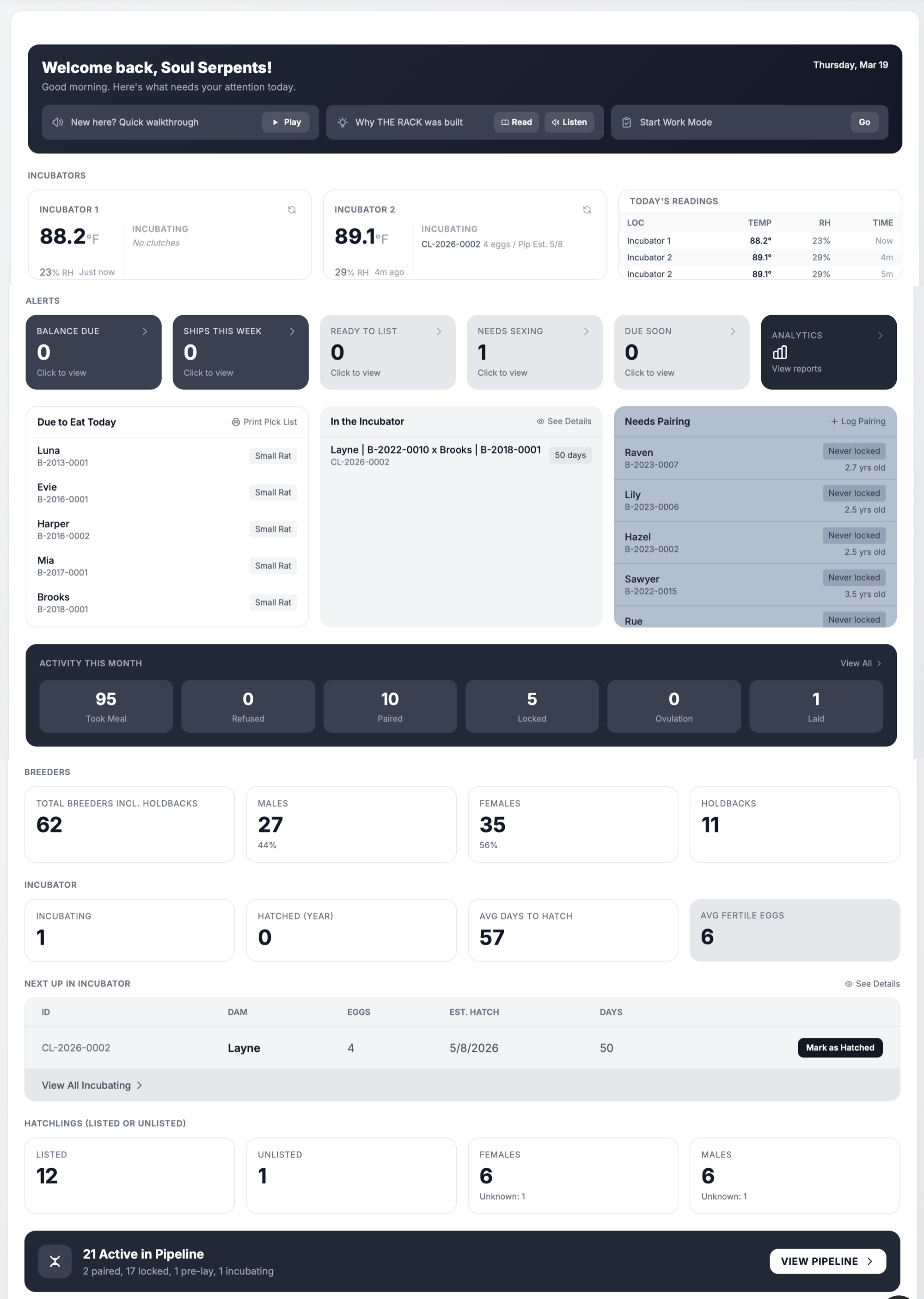
Want this exact system for tracking your collection?
Track Development.
Select With Data.
THE RACK records weight trends, feeding logs, and genetics for every animal so your holdback decisions are informed by data, not memory.
See THE RACKHonest Expectations for Buyers
No snake stays identical forever. Communicating this honestly builds trust and protects your reputation as a breeder. Buyers who understand color shift before they purchase are less likely to feel disappointed when natural maturation occurs.
Photographing animals in neutral light without filters shows buyers the true tones. No exaggeration. No false contrast. The difference between a filtered photo and a clean snake is obvious over time. Authenticity today prevents frustration tomorrow.
Breeder Standard
Good breeding does not defy aging. It controls how aging looks. The goal is grace, not immunity.
Color shift is a reality of ball python biology. The breeders who acknowledge it, study it, and select against its worst effects are the ones who produce animals that hold their value year after year. Plan for longevity. Breed for contrast. Document everything.
Content verified against THE RACK breeding database. Genetics and color shift data sourced from active breeding programs and published research. Last reviewed April 2026.
Built by a Breeder
Breed for Contrast
That Lasts
Genetics calculator. Weight trends. Lineage tracking. Feeding logs. The data you need to select animals that age well.
See THE RACKFree for up to 5 animals. Keeper $10/mo. Breeder $20/mo. 7-day money-back guarantee.