
News / When Males Go Off Food During Breeding Season
When Males Go Off Food During Breeding Season
- Males stop eating during breeding season because their hormonal drive overrides their feeding response. This is biology, not illness.
- Pre-season condition is everything. Males that enter the season in strong body condition can safely fast for weeks.
- Never force-feed a fasting breeder. Forcing meals can cause regurgitation and additional stress.
- Weight trends plotted across breeding seasons reveal each male's individual pattern and guide pairing decisions.
In This Guide
Every breeder eventually meets the same moment: a male stops eating. He locked last week, he is pacing the tub, and the perfect strike response is gone. This is not a crisis. Male ball pythons go off food during breeding season because their biology redirects energy from digestion to reproduction. Understanding this cycle lets you manage it instead of fighting it.
Why Males Stop Eating
The breeding season triggers instinct. When cooler temperatures arrive and females begin building follicles, males sense pheromones and shift into breeding mode. Appetite drops because their biology tells them the priority is elsewhere.
Some males skip a few meals. Others go months without taking a bite. As long as the male holds weight and muscle tone, this is part of the process. Male ball pythons do not stop eating because they are unhealthy. They stop because their hormonal drive overrides their feeding response.
The Key
Males that enter breeding season in strong body condition can safely fast for weeks. Preparation happens before the season, not during it.
Managing breeding males?
Track Weight. Track Feedings. Know Every Male's Cycle.
THE RACK plots weight trends and feeding patterns across seasons so you know which males need rest and when appetite will return.
See THE RACKReading the Signals
When males start cruising their tubs, pressing against walls, or constantly searching, they are ready to pair. Movement spikes even during the day. They ignore prey they would normally strike without hesitation.
Logging every male's feeding cycle and behavior before the season starts provides context. When feeding slows, the data confirms it is seasonal, not a husbandry issue. Feeding logs paired with behavioral notes across multiple seasons reveal each male's individual pattern.
A well-conditioned male can safely lose weight during the breeding period. The key is entering the season in strong condition, not playing catch-up mid-cycle.
Maintaining Condition
Feed males well before introducing them to females. Good reserves mean stable energy when fasting begins. Check weights monthly and monitor hydration closely throughout the season.
Hydration is critical during fasting periods. Always provide clean water and keep humidity steady. Dehydration magnifies stress and suppresses recovery when appetite returns.
Never force-feed or scent-switch a fasting breeder. Forcing a meal can cause regurgitation and additional stress. Let the natural cycle run its course. The male will eat again when the breeding drive settles.
Environmental Support
A consistent thermal gradient helps males resume eating sooner when breeding season ends. Keep ambient temps stable at 80 degrees Fahrenheit and hot spots near 88 to 90 degrees. Avoid over-cooling. Drastic temperature changes can extend fasting periods.
When breeding season winds down, gradually raise temperatures back to neutral levels to signal rest and recovery.
Good breeders do not fight natural behavior. They manage it.
Tracking Patterns Across Seasons
Documentation separates professionals from hobbyists. Recording every refusal, lock, and shed cycle reveals how long each male's fast typically lasts and when appetite tends to return.
Patterns emerge over time. Some males eat again as soon as pairings stop. Others take an extra month. Knowing your snakes' individual cycles prevents unnecessary worry and helps you plan feeding recovery schedules.
Weight trends plotted across breeding seasons show whether a male is losing too much condition or maintaining within acceptable range. This data guides decisions about pairing frequency and rest periods.
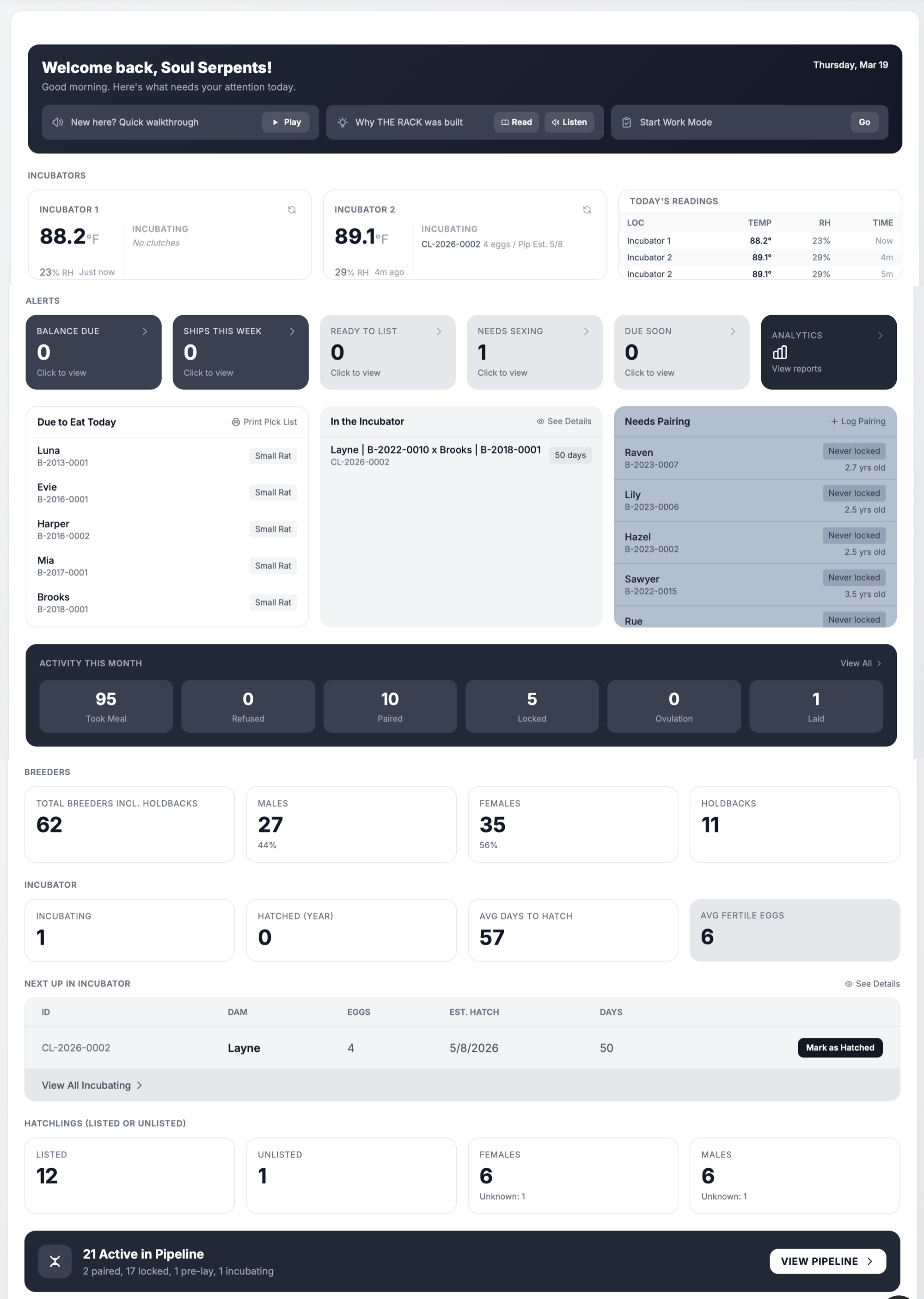
Want this exact system for managing your breeding males?
Track Weight. Track Feedings.
Know Every Male's Cycle.
THE RACK plots weight trends and feeding patterns across seasons so you know which males need rest and when appetite will return.
See THE RACKPost-Season Recovery
Once breeding season ends, refocus on feeding recovery. Smaller, more frequent meals rebuild condition. Prey slightly undersized digests faster and stimulates appetite without overwhelming the system.
Limit handling and pairing after the final lock. Rest and feeding recovery take priority. Within a few weeks, most males return to normal routines.
Recovery Protocol
Smaller prey. More frequent offerings. Minimal handling. Most males rebound within weeks of the last pairing.
Each snake has its own rhythm. The more you document, the less these seasonal changes feel like problems. Over time, you know which males are steady eaters and which go all business when the females start glowing. Patience and observation always win. Healthy males rebound, breed stronger, and stay consistent year after year.
Content verified against THE RACK breeding database. Breeding male behavior data sourced from active programs across multiple seasons. Last reviewed April 2026.
Built by a Breeder
Manage the Season.
Protect the Males.
Weight trends. Feeding logs. Pairing records. The data that turns seasonal fasting from worry into routine.
See THE RACKFree for up to 5 animals. Keeper $10/mo. Breeder $20/mo. 7-day money-back guarantee.