
News / Why Clean Systems Create Healthy Clutches
Why Clean Systems Create Healthy Clutches
- Spot clean daily, maintain weekly, deep clean monthly. Layered cleaning prevents outbreaks and creates predictable performance.
- Clean tubs support consistent ovulation, reliable feeding, and hatchlings that are healthy from day one.
- Quarantine every new arrival for a minimum of 60 days in a separate area with dedicated tools.
- Logging each cleaning cycle alongside health records connects maintenance to animal performance.
In This Guide
Clean systems build healthy snakes. Every shed, every clutch, and every feeding starts with what is inside the tub. A spotless setup prevents stress, reduces illness, and builds the kind of confidence that shows up in breeding results. Structure and sanitation are inseparable.
The Power of Clean Systems
Ball pythons thrive in stable, bacteria-free environments. Waste left behind for even a few days can trigger respiratory infections or scale irritation. Snakes in spotless systems feed and shed more reliably than those kept in inconsistent setups.
Clean enclosures protect more than health. They protect investment. Every clutch starts with a female that is conditioned and stress-free. A dirty setup ruins that foundation before breeding season begins.
Breeder Principle
Clean tubs equal consistent ovulation, reliable feeding, and healthy hatchlings. When eggs come from healthy females, they are stronger from day one.
The Cleaning Schedule
A layered system keeps every enclosure at the same standard.
- Spot clean daily. Remove waste and shed as soon as it appears. Replace soiled substrate and wipe down affected areas.
- Weekly maintenance. Replace paper or liner, clean water bowls, and wipe the entire tub with disinfectant.
- Monthly deep clean. Disassemble racks, scrub every bin, sanitize heating elements, and rinse thoroughly before resetting.
No shortcuts. Consistency prevents outbreaks and creates predictable performance during breeding season.
Want to connect maintenance to results?
Log Every Clean. See the Impact.
THE RACK logs health records, shed cycles, and activity notes so you can trace every outcome back to your facility standards.
See THE RACKCleaning Supplies That Work
- Hydrogen peroxide (3%). Breaks down safely with no harsh residue. Good for general cleaning.
- Chlorhexidine solution (2%). Used by veterinarians and breeders. Effective against bacteria and safe after drying.
- F10 SC disinfectant. Broad-spectrum, gentle, and reliable for deep cleans or post-quarantine sanitizing.
- Nitrile gloves. Protect hands and prevent cross-contamination between tubs.
- Dedicated scrub brushes. Separate tools per rack section to avoid cross-use.
Bleach stays out of snake areas. Its fumes linger and residue irritates respiratory systems. Safety always comes before convenience.
Step-by-Step Rack Routine
Remove the snake and place it in a labeled holding tub.
Empty the tub and dispose of old substrate or liner.
Spray disinfectant and let it sit for several minutes.
Scrub and wipe all corners and seams thoroughly.
Rinse thoroughly. Residue is the enemy of clean systems.
Dry the tub completely. Moisture creates bacteria growth.
Reset with fresh liner, clean water, and verified temperature and humidity.
Logging each cleaning cycle alongside health records creates a timeline that connects maintenance to animal performance. When a problem surfaces, the data shows whether a cleaning gap was the cause.
Discipline creates predictable results.
Quarantine and Biosecurity
Every new arrival goes through a minimum 60-day quarantine in a separate area. Disposable gloves for each enclosure and dedicated tools prevent cross-contamination. This step separates professional operations from casual collections.
Disinfectant mats at room entry points and hand sanitizer on every rack turn small habits into real protection. Cross-contamination ends projects before they start.
How Clean Systems Affect Breeding
Females in dirty environments eat inconsistently and lay weaker clutches. Clean tubs support consistent ovulation, reliable feeding, and hatchlings that are healthy from day one.
Tracking each clutch from the female's pre-lay shed to hatch connects facility maintenance to reproductive outcomes. Clean records, clean tubs, clean outcomes.
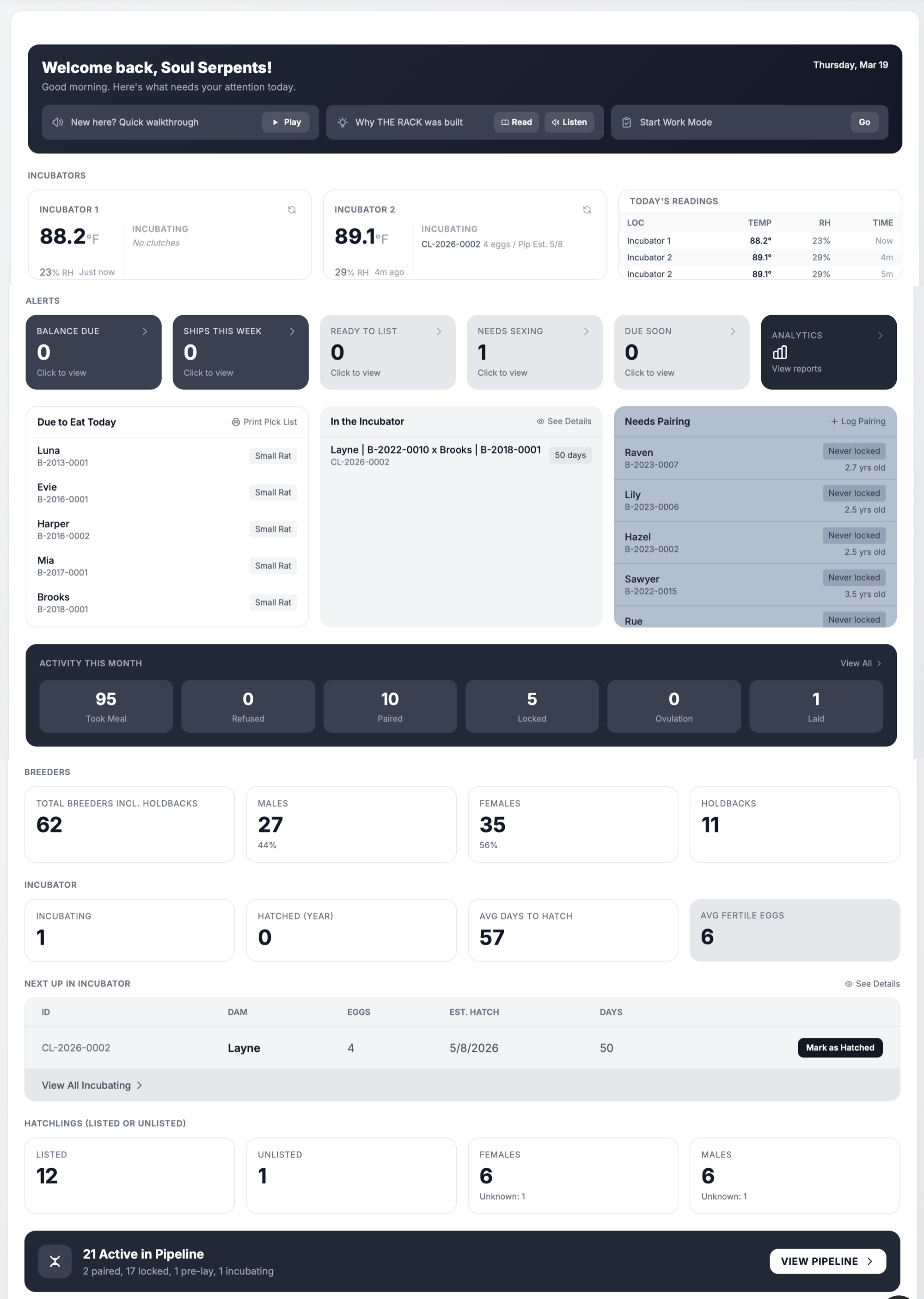
Want this exact system for managing facility health?
Log Every Clean. Track Every Shed.
Connect Maintenance to Results.
THE RACK logs health records, shed cycles, and activity notes so you can trace every outcome back to your facility standards.
See THE RACKDiscipline Makes the Difference
Cleaning is repetitive, but repetition builds reputation. A spotless rack room is a visual reflection of discipline, and discipline produces results. It is not about how fast you grow your collection. It is about how carefully you maintain it.
If you want predictable breeding results, start with predictable cleanliness.
The Formula
Spot clean daily. Maintain weekly. Deep clean monthly. Document everything. Clean systems are the invisible foundation of every successful program.
Content verified against THE RACK breeding database. Cleaning protocols sourced from active breeding facility operations. Last reviewed April 2026.
Built by a Breeder
Clean Systems.
Healthy Clutches.
Health records. Shed tracking. Activity logs. The system that connects facility standards to breeding results.
See THE RACKFree for up to 5 animals. Keeper $10/mo. Breeder $20/mo. 7-day money-back guarantee.