
News / Feeding Ball Pythons Like a Breeder
Feeding Ball Pythons Like a Breeder
- Consistency over quantity. Feed the same day, same time, same conditions. Rhythm builds trust and reduces refusals.
- Prey quality matters. Disease-free, well-raised rodents from verified suppliers directly affect growth, fertility, and condition.
- Environment drives appetite. Temps below 80F or low humidity suppress feeding response.
- Strong eaters become reliable breeders. Females that eat well build follicles faster and lay cleaner clutches.
- Track every meal, acceptance, and refusal. Data tells the truth.
Feeding is the heartbeat of husbandry. Nothing affects a ball python's success more than how you feed it. Every shed, every pairing, every clutch starts with a steady feeding response. The difference between an average keeper and a breeder who produces consistent results comes down to routine, quality, and timing.
In This Guide
Consistency Over Quantity
Ball pythons thrive on rhythm. Feed the same day, at the same time, under the same conditions. Consistency builds trust. When a snake knows what to expect, refusals drop. Schedule feedings weekly for hatchlings, every 7 to 10 days for juveniles, and 10 to 14 days for adults.
Overfeeding is one of the fastest ways to create lazy feeders and obese breeders. A slight body curve after feeding is correct. A visible bulge means the prey was too large or feedings are too frequent.
BREEDER PRINCIPLE
Feed quality equals snake quality. Poorly raised rodents create long-term health issues. Source from professional suppliers who maintain clean colonies.
The Role of Prey Quality
Rodent quality directly affects growth rates, fertility, and overall condition. Feed well-raised, disease-free prey from verified suppliers. Every prey item should be thawed completely, warmed to approximately 100 degrees Fahrenheit, and offered with tongs.
The smell, temperature, and presentation all influence strike response. A consistent feeding routine with quality prey builds reliable eaters that stay in condition year-round.
How Environment Shapes Appetite
Most missed meals trace back to the setup, not the snake. If temperatures dip below 80 degrees or humidity drops below minimum thresholds, the snake goes into standby. Proper heat gradients and stable enclosures create the comfort that triggers feeding response.
Dialing in the environment is the foundation of every feeding success. Consistent strikes, fast coils, and no hesitation are the signs you have it right.
Timing Around Breeding Season
During breeding months, some females slow feeding as follicles develop. Males go off food completely as they focus on pairing. This is normal and temporary. Continue offering meals on schedule without forcing. Maintaining routine keeps hormones and weight in check until appetite returns.
Track every meal, acceptance, and refusal using feeding logs. Data tells the truth. When a snake skips a meal, the records show why and when it last fed. No guesswork required.
Strong eaters become reliable breeders.
Hatchling Feeding and Patience
Hatchlings can take several attempts to start feeding. Small adjustments work better than force or stress: lowering light, switching prey scent, or offering at night. Hatchlings should not leave a program until they are eating with consistency. That is the standard.
The Link Between Feeding and Breeding
Strong eaters become reliable breeders. Females that eat well build follicles faster, lay cleaner clutches, and recover sooner. Males that maintain weight through the season lock more consistently. Feeding is not about growth alone. It is about creating reproductive stability.
Every pairing in a well-run collection starts with months of perfect feeding before the first lock ever happens. The conditioning phase before breeding season determines the quality of results during it.
Tracking weight trends across your collection reveals which animals are building condition and which need attention before pairing begins.
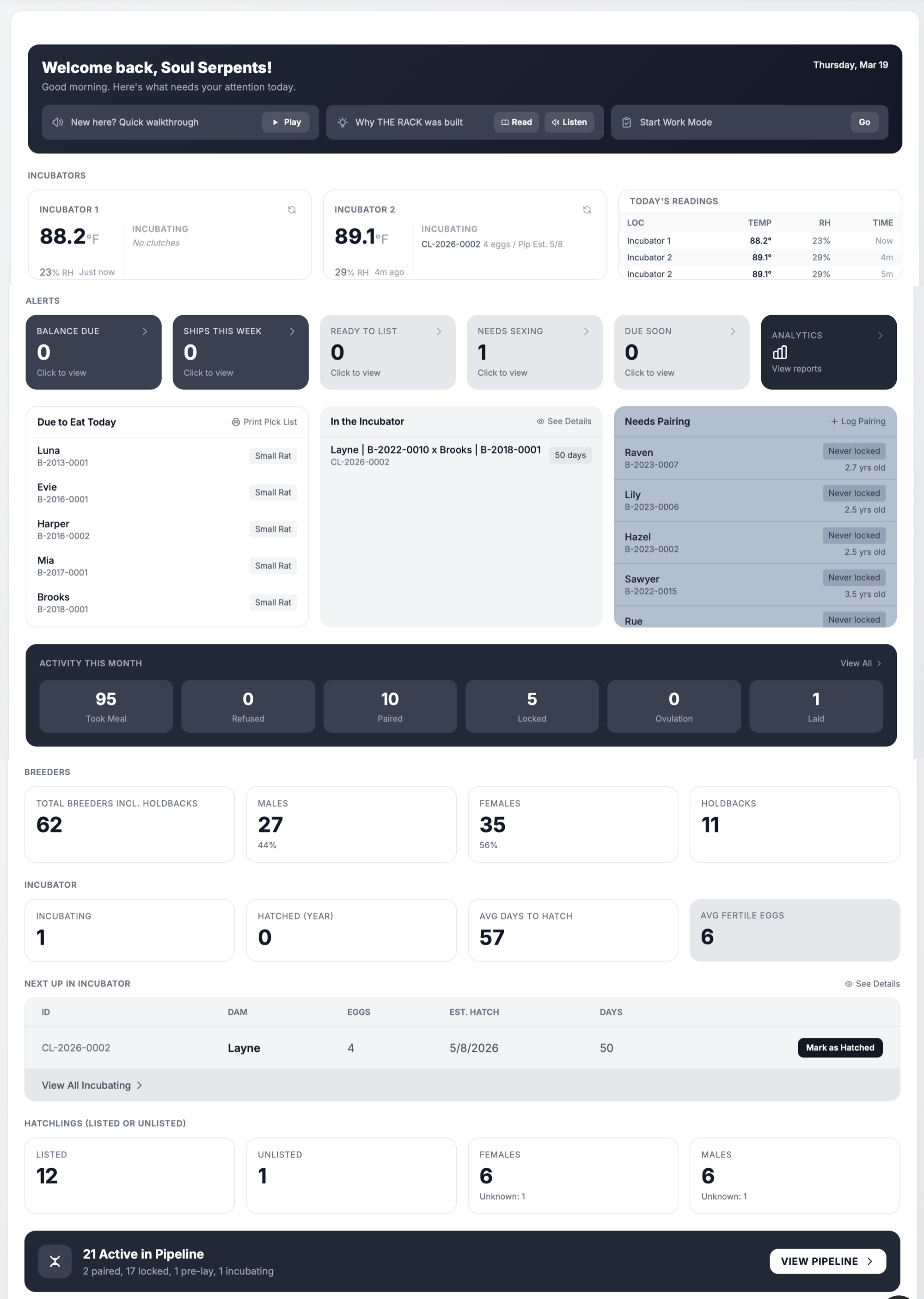
Manage feeding across your entire collection
Every Meal Logged.
Every Pattern Visible.
THE RACK shows which animals need feeding today, tracks acceptance and refusals, and plots weight trends across your entire collection. Facility management software built by a breeder.
See THE RACKThe Discipline Behind Confidence
Ball pythons read rhythm and predictability. Keepers who feed consistently, respect their animals' signals, and record every result rarely face chronic issues. It is discipline, not instinct. The cleaner the system, the cleaner the outcome.
THE FORMULA
Consistent schedule. Quality prey. Stable environment. Documented results. Feeding confidence is built, not found.
Content verified against THE RACK breeding database. Feeding protocols and breeding condition data sourced from active breeder programs. Last reviewed April 2026.
Built by a Breeder
Feed With Purpose.
Breed With Confidence.
Feeding logs. Weight trends. Bulk feeding. The facility management software that makes consistent feeding effortless across any collection size.
See THE RACKFree for up to 5 animals. Keeper $10/mo. Breeder $20/mo. 7-day money-back guarantee.