
News / Essential Tips for Feeding Your Ball Python
Essential Tips for Feeding Your Ball Python
- Prey size should match the widest part of the snake's body. Oversized prey risks regurgitation.
- Consistency builds confident eaters. Same day, same time, same conditions.
- Before blaming the snake for a refusal, check temperatures, humidity, and hides first.
- Seasonal appetite changes are biological, not problems. Document patterns and trust the data.
Feeding ball pythons well is the single most important skill in husbandry. The right approach eliminates most refusals, supports consistent growth, and keeps animals in condition for breeding. This guide covers prey sizing, schedules, environment factors, refusal troubleshooting, and seasonal patterns.
Choose the Right Prey Size
Prey should be no larger than the widest part of the snake's body. Oversized prey risks regurgitation and digestive stress. Undersized prey provides insufficient nutrition. The goal is a slight body curve after feeding, not a visible bulge.
Ball pythons can feel intimidated by prey that is too large. If a snake declines a meal, offering a smaller-sized prey item on the next attempt often resolves the issue. Work back up to the appropriate size once the feeding response is consistent.
Establish a Feeding Routine
Consistency builds trust between keeper and snake. Feed the same day, at the same time, under the same conditions. Ball pythons are creatures of rhythm. When they know what to expect, refusals drop significantly.
- Hatchlings. Every 5 to 7 days.
- Juveniles. Every 7 to 10 days.
- Adults. Every 10 to 14 days.
Feed at night when ball pythons are most active. Thaw frozen prey completely, warm it to approximately 100 degrees Fahrenheit, and offer it with tongs. The smell, temperature, and presentation all affect strike response.
KEY PRINCIPLE
A healthy ball python can go multiple weeks without eating without adverse health effects. One or two refused meals are not cause for concern.
Environment Drives Appetite
Before blaming the snake for a missed meal, check the setup. If temperatures dip below 80 degrees Fahrenheit or humidity drops too low, the feeding response shuts down. Ball pythons eat when their environment feels right.
Verify temperatures with digital probes. Confirm humidity is between 55 and 65 percent. Ensure hides are secure and the enclosure provides adequate privacy. A stressed snake does not eat. Fix the environment and the appetite follows.
After Feeding: Leave Them Alone
After a meal, ball pythons require time to digest properly. Do not handle or disturb the snake for at least 48 hours after feeding. This allows efficient nutrient absorption and minimizes regurgitation risk.
Monitor Weight Regularly
Weigh your ball pythons consistently using a digital scale. Weight is the most objective measure of feeding success. Steady weight gain in growing animals and weight stability in adults confirms the program is working.
Sudden weight changes in either direction deserve attention. Track every weigh-in alongside feeding records. Weight trends plotted over time reveal patterns that a single data point cannot show.
Avoid Overfeeding
Ball pythons gain weight easily when fed too frequently or with oversized prey. Obesity creates digestive issues, reduces breeding performance, and shortens lifespan. Stick to the schedule. A lean, muscular body condition outperforms an overfed one every time.
Consistent feeding builds reliable eaters. Not the other way around.
Seasonal Changes in Appetite
Ball pythons naturally reduce feeding during certain times of the year. Breeding males often stop eating entirely during pairing season. Females building follicles may refuse meals for weeks. These are biological rhythms, not problems.
Continue offering food on schedule during these periods. Reduce prey size if the snake shows reduced interest. Do not force-feed unless the animal's health is genuinely at risk. Appetite returns when the seasonal drive passes.
Documenting feeding patterns across seasons reveals each animal's individual cycle. Some snakes are steady eaters year-round. Others have predictable fasting windows. Knowing which is which eliminates unnecessary worry. Feeding logs make this tracking simple across any collection size.
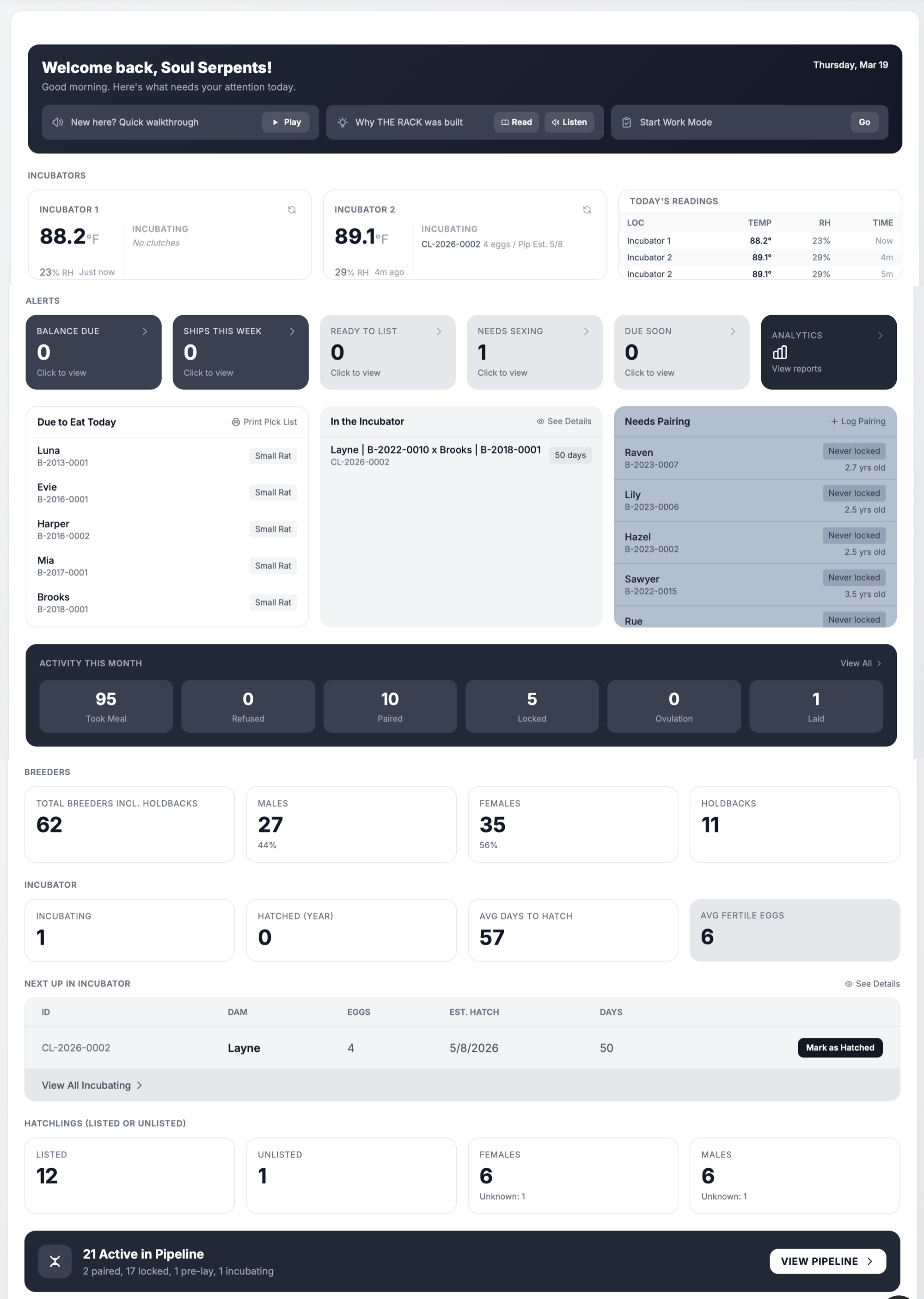
Want this exact system for tracking feedings?
Every Meal. Every Refusal.
Every Pattern.
THE RACK logs every feeding with date, prey size, and acceptance. Weight trends and feeding history in one view for every animal.
See THE RACKWhen Refusals Persist
If a ball python refuses food for more than three to four consecutive attempts, work through this checklist:
- Verify hot spot temperature is 88 to 90 degrees Fahrenheit
- Confirm humidity is 55 to 65 percent
- Check that hides are secure and enclosure is not over-exposed
- Try offering smaller prey
- Switch prey type (mouse to rat or vice versa)
- Offer during evening hours in a dark, quiet environment
- Check for signs of illness: wheezing, bubbles, mites, retained shed
If the refusal persists beyond six weeks with weight decline, consult a reptile veterinarian. Ball pythons rarely starve themselves when proper care is provided, but underlying health issues can suppress appetite.
FEEDING SUCCESS FORMULA
Right prey size. Right temperature. Right timing. Right records. The rest is patience.
Feeding your ball python well is a discipline, not a mystery. Build the routine, maintain the environment, document the results, and trust the process.
Built by a Breeder
Feed With Confidence.
Track With Data.
Feeding logs. Weight trends. Refusal tracking. The system that turns feeding from guesswork into routine.
See THE RACKFree for up to 5 animals. Keeper $10/mo. Breeder $20/mo. 7-day money-back guarantee.