
News / How to Get a Picky Ball Python to Eat
How to Get a Picky Ball Python to Eat
- Most feeding refusals are environment problems. Fix temperature and humidity before changing anything else.
- Hot spot at 88-90F, cool side at 78-82F, humidity at 55-65%.
- Reduce handling during refusal periods. Minimize stress until feeding response returns.
- Drop prey size, offer at night, and change one variable at a time to identify the fix.
- If refusal persists beyond six weeks with weight loss, consult a reptile veterinarian.
Picky eating is one of the most common concerns ball python owners face. The good news: most feeding refusals trace back to environment or approach, not the snake itself. This guide walks through the most effective strategies for restoring consistent feeding in reluctant eaters.
In This Guide
Start With Husbandry
Before troubleshooting the snake, troubleshoot the setup. Temperature and humidity are the two most common causes of feeding refusals. A ball python in a cold, dry enclosure has no reason to eat; its digestive system cannot function properly below minimum thresholds.
- Confirm hot spot is 88 to 90 degrees Fahrenheit
- Verify ambient cool side is 78 to 82 degrees
- Check humidity is 55 to 65 percent
- Ensure both warm and cool hides are secure and tight-fitting
Fix any environmental issue first. Give the snake one full week in corrected conditions before reattempting a feeding. Many long-standing refusals resolve within one or two feeding attempts after the environment is dialed in.
FIRST STEP
Most feeding refusals are environment problems, not snake problems. Fix the setup before changing anything else.
Provide Adequate Security
Ball pythons are naturally cautious animals. They need to feel hidden and protected before they will eat confidently. An enclosure with too much open space, too much light, or too few hides creates stress that suppresses appetite.
Add multiple hiding spots throughout the enclosure. Tight-fitting hides where the snake makes contact with the walls on multiple sides are more effective than oversized caves. Cover exposed glass with backgrounds or paper if the snake seems visually stressed.
Reduce Handling
Ball pythons that are handled frequently during a refusal period often continue refusing. Minimize interaction during troubleshooting. Let the snake settle into its enclosure without disturbance for several days before the next feeding attempt.
The goal is to reduce every possible stressor until the feeding response returns. Once the snake is eating consistently again, handling can resume gradually.
Adjust Prey Size
Prey that is too large can intimidate a ball python into refusing. If refusals persist, drop down one prey size. A smaller item is less threatening and often triggers the strike response that a larger item did not.
Once the snake accepts smaller prey consistently, increase size gradually over several feedings until you reach the appropriate ratio (prey matching the widest part of the snake's body).
Time the Offering
Ball pythons are nocturnal hunters. Offering prey during daylight hours reduces the chance of acceptance. Feed in the evening or at night with minimal lighting. A dark, quiet room simulates the conditions that trigger natural hunting behavior.
Place the prey near the hide entrance and leave the room. Some ball pythons will not strike with a person present. Check back in 30 to 60 minutes.
Fix the environment. The appetite follows.
Additional Strategies
- Try a different prey type. Switch from rat to mouse (or vice versa) to see if the scent triggers a different response.
- Brain the prey. Puncturing the skull of frozen-thawed prey releases a stronger scent that can stimulate reluctant feeders.
- Scent transfer. Rub the prey item on a different species (chick, gerbil) to change the scent profile.
- Leave the prey overnight. Some ball pythons prefer to eat without being watched. Leave the item in the enclosure overnight and check in the morning.
- Cup feeding. Place the snake and the prey item in a small, dark, enclosed container (like a deli cup with ventilation). The confined space and close proximity can trigger a feeding response.
Every snake is an individual. What works for one will not work for another. Systematic troubleshooting, changing one variable at a time, identifies the specific issue faster than trying multiple changes at once.
Document every attempt with the method used, prey type, prey size, time offered, and result. Feeding logs that track refusals alongside environmental conditions reveal the specific combination that works for each animal.
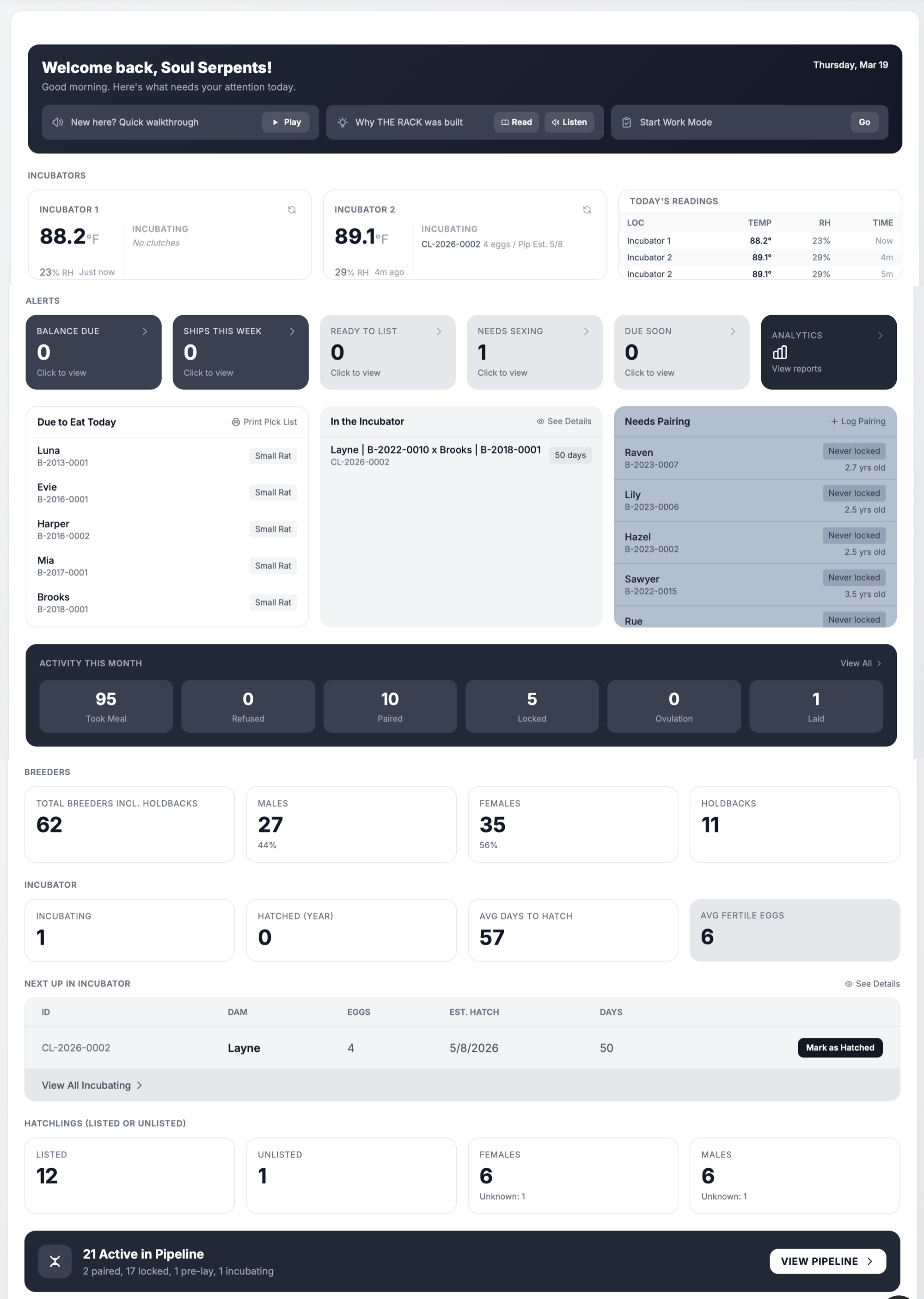
Find the feeding pattern that works
Log Every Attempt.
Find Every Pattern.
THE RACK tracks meals, refusals, prey size, and method for every animal. Spot the pattern that turns a picky eater into a consistent one. Facility management software built by a breeder.
See THE RACKWhen to Seek Professional Help
If a ball python refuses food for more than six weeks while losing weight, and environmental corrections have not resolved the issue, consult a reptile veterinarian. Signs that warrant immediate veterinary attention include wheezing, mouth bubbles, visible mites, and significant body condition decline.
Ball pythons rarely refuse food indefinitely when proper care is provided. Patience, systematic adjustments, and consistent conditions resolve the vast majority of picky eating.
REMEMBER
Each snake is an individual. Change one variable at a time. Patience and observation solve more feeding issues than worry.
Content verified against THE RACK breeding database. Feeding troubleshooting protocols sourced from active breeder programs. Last reviewed April 2026.
Built by a Breeder
Every Feeding.
Documented.
Feeding logs. Refusal tracking. Weight trends. The facility management software that turns picky eaters into consistent feeders.
See THE RACKFree for up to 5 animals. Keeper $10/mo. Breeder $20/mo. 7-day money-back guarantee.