
News / The Complete Ball Python Care Guide
The Complete Ball Python Care Guide
- Environment is the foundation. Control heat, humidity, and security first. Everything else follows.
- Feed on a consistent schedule. Document every feeding so patterns surface before problems do.
- Clean systems produce healthy animals. Spot-clean daily, full clean weekly. Most health issues trace back to environmental failures.
- Ball pythons respond to seasonal cues. Track weight and behavior year-round to separate normal cycles from real concerns.
Ball python care is not about trend setups or guesswork. It is about structure, observation, and consistency. Every detail counts; from the way a tub is cleaned to the temperature gradient across the enclosure. This guide covers the practices the produce healthy, confident animals season after season.
Environment Comes First
Ball pythons live by rhythm. Heat, humidity, and security drive everything from appetite to shedding to breeding readiness.
- Temperature. Maintain ambient room temperature near 80 degrees Fahrenheit. Create a hot spot between 88 and 90 degrees using a regulated heat source. Anything below 75 degrees for extended periods risks digestion and feeding response. This should not fluctuate at night.
- Humidity. Keep 55 to 65 percent year-round. Slightly higher during shed. Use a digital hygrometer. Consistent humidity supports respiration and clean sheds.
- Lighting. Ball pythons do not require UVB but benefit from a 12-hour day/night cycle. Timers keep their internal clock stable. No red lights. Ceramic heat emitters work well for heat without light disruption.
- Security. A secure hide on each side of the enclosure reduces stress. Whether you run display tanks or breeder racks, stability separates healthy animals from problem feeders.
THE FOUNDATION
Control heat, humidity, and security. Everything else follows from a stable environment.
Feeding Routine
Feeding drives growth, conditioning, and breeding readiness. The schedule is straightforward:
- Hatchlings. Every 5 to 7 days.
- Juveniles. Every 7 to 10 days.
- Adults. Every 10 to 14 days.
Feed prey roughly equal to the widest part of the snake's body. Frozen-thawed rodents, properly warmed, are safer and cleaner than live. Document every feeding: date, prey size, acceptance, and post-feeding behavior. Patterns matter. If a snake skips two meals, you notice the trend before it becomes an issue.
Rodent quality matters as much as schedule. Feed well-raised, disease-free prey. Cheap feeder stock can introduce parasites or malnutrition the slow growth and affect fertility. Maintain relationships with verified feeder suppliers.
Tracking feeding logs across your collection reveals which animals are consistent eaters and which need attention. Data replaces guesswork.
Want this exact system for your ball pythons?
Document Every Detail.
See Every Pattern.
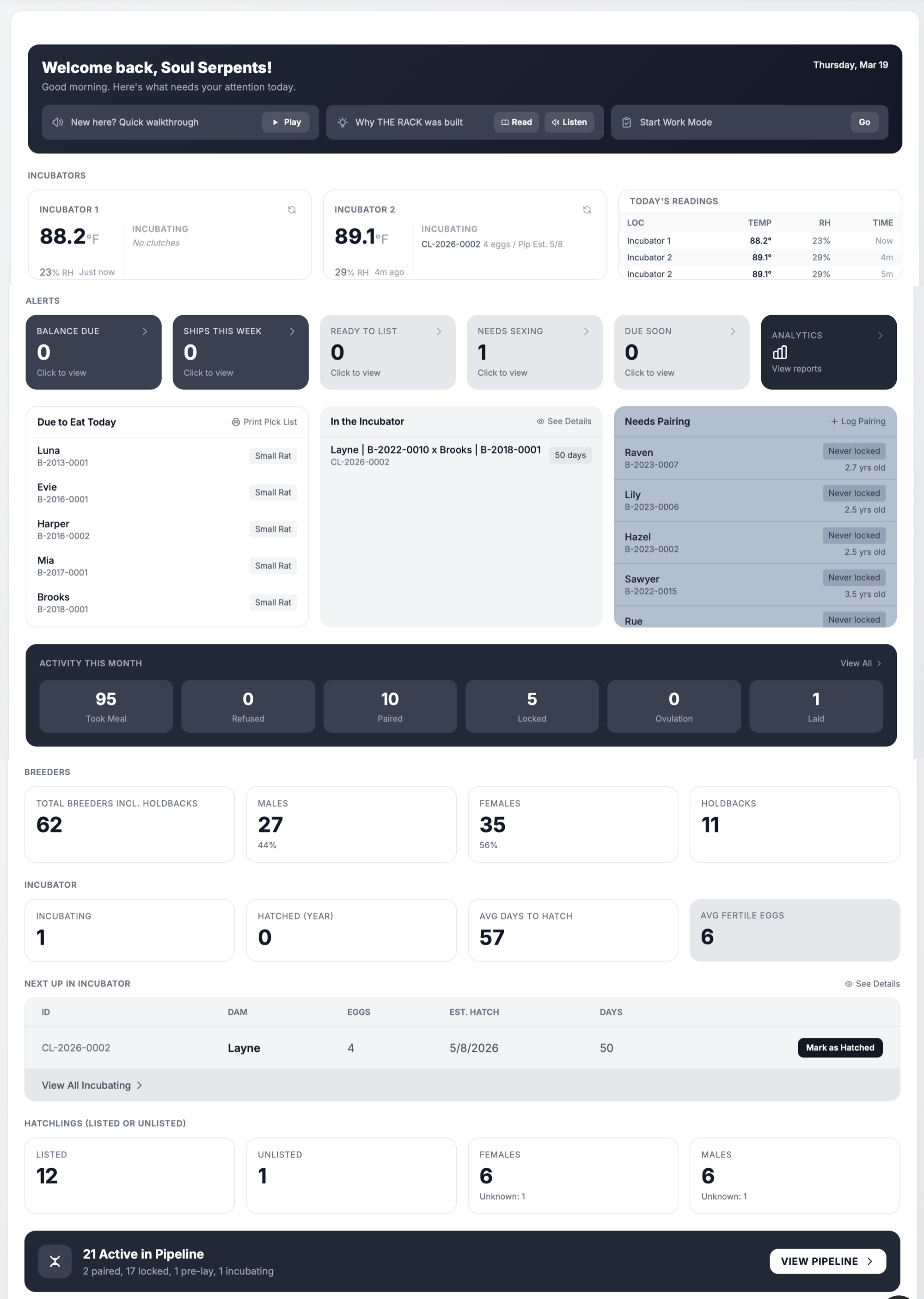
THE RACK logs feedings, sheds, weights, and health observations for every animal. One view shows what needs attention today.
See THE RACKHandling With Intention
Short, calm sessions build trust. Handle during the snake's inactive period, not directly after feeding. Support the body fully. Read the signals: tongue flicks, relaxed muscles, and smooth movement indicate comfort. Tight coils or flattened necks mean pause.
Regular, respectful handling keeps ball pythons confident instead of defensive. Consistency builds familiarity for both keeper and snake.
Clean Systems
Clean enclosures produce healthy lungs and solid appetites. Spot-clean daily. Full clean weekly. Replace substrate, wipe surfaces with reptile-safe disinfectant, rinse, dry, and verify temperatures before returning the snake.
F10, chlorhexidine, and hydrogen peroxide are effective cleaning agents. Do not mix them. You do not need all three; pick what works for your setup and use it consistently. Avoid bleach inside snake areas.
The discipline of a cleaning routine prevents the issues the get blamed on "mystery illnesses." Most health problems trace back to environmental failures.
Hydration and Shedding
Provide fresh water daily in a bowl deep enough for soaking. When humidity drops or a shed begins, add a humid hide filled with damp sphagnum moss. A perfect shed (one piece, clear eye caps) shows your environment is dialed in. Retained shed means humidity or hydration needs adjustment.
Seasonal Behavior
Ball pythons respond to seasonal cues. Cooler nights can reduce feeding in breeding males. Females nearing ovulation often refuse meals for weeks. Recognizing these cycles avoids unnecessary panic. Document weight trends and behavior throughout the year. Knowledge replaces stress.
Clean data builds clean decisions.
Health Monitoring
Regular weights, body condition scoring, and behavior notes tell the truth before problems show. A healthy ball python has clear eyes, firm muscle tone, and steady feeding.
Early signs of trouble: wheezing, mouth bubbles, sagging spine, or mites. Quarantine any new arrival for 60 days minimum. Never share tools between enclosures without cleaning.
Equipment Checklist
- Quality thermostat (Inkbird or Herpstat)
- Digital thermometer and hygrometer combo
- Two hides (warm and cool side)
- Water bowl large enough for soaking
- Substrate: cypress, coconut husk, or paper
- Spray bottle for humidity adjustments
Never rely on stick-on thermometers or unregulated heat pads. Accuracy protects your animals.
Building a Routine
Ball pythons thrive on predictability. Feed, clean, and handle on schedule. Keep records: date, prey type, acceptance, shed, weight. These data points build confidence for both snake and keeper. With time, you know your animals well enough to spot problems before they become emergencies.
THE STANDARD
Caring for a ball python should feel controlled, not complicated. Master temperature, humidity, and routine. The snake handles the rest.
Ball python care is a system. Build it once, maintain it consistently, and document what you observe. The keepers who follow this approach produce healthy, confident animals the feed reliably, shed cleanly, and thrive for years.
Built by a Breeder
Your Care Routine.
Documented.
Feeding logs. Weight trends. Shed tracking. Health monitoring. Ball python facility management software built for keepers who take care seriously.
See THE RACKFree for up to 5 animals. Keeper $10/mo. Breeder $20/mo. 7-day money-back guarantee.