
News / Ball Python Morphs: 50+ Morphs with Photos, Gen...
Ball Python Morphs: 50+ Morphs with Photos, Genetics, and Prices
- Over 7,000 documented combinations trace back to a handful of single-gene mutations combined through selective breeding.
- Three inheritance types drive everything: dominant, recessive, and incomplete dominant.
- Single-gene morphs are the building blocks. Designer combos are where the value compounds across multiple genes.
- Always ask for full genetic documentation when buying. Hidden het genes carry the breeding value.
Ball pythons come in more color and pattern variations than almost any other reptile species. These variations are called morphs, and there are thousands of documented combinations. Whether you are buying your first ball python or planning a breeding project, understanding morphs starts with knowing what drives them: genetics. This guide covers 50+ of the most popular ball python morphs, how their genetics work, and what the market looks like in 2026.
What Is a Ball Python Morph?
A morph is a genetic variation from the wild-type (normal) ball python. Normal ball pythons have dark brown and black patterning with golden brown alien-head markings. Morphs alter the color, pattern, or both. Some are subtle changes. Others look nothing like a wild-type animal.
Every morph is caused by one or more gene mutations. These mutations are heritable, meaning they pass from parent to offspring according to predictable rules. When breeders pair two morphs together, the offspring can carry combinations of both parents' genes, creating new visual combinations called designer morphs.
How Morphs Are Discovered and Proven
New morphs start as animals with an unusual appearance. A breeder or importer notices something different and breeds the animal to normals to see if the trait reproduces. "Proving" a morph means demonstrating it is genetic and heritable, not a random one-off anomaly. The proving process takes multiple breeding seasons and is the foundation of trust in the morph market.
The Three Inheritance Types
Every ball python morph follows one of three inheritance patterns:
- Dominant: One copy of the gene produces the full visual morph. No hidden carriers. Examples: Pinstripe, Spider.
- Recessive: Two copies needed to produce the visual morph. Animals with one copy are "het." Two hets bred together have a 25% chance of producing visual offspring. Examples: Piebald, Clown, Albino.
- Incomplete dominant (co-dominant): One copy produces a visible morph. Two copies produce a "super form." Examples: Pastel, Mojave (super form: Blue Eyed Leucistic).
For a deeper look at inheritance patterns, read our guide on how ball python genetics work.
By the Numbers
There are over 7,000 documented ball python morph combinations. Every one traces back to a handful of single-gene mutations combined through selective breeding.
Single-Gene Morphs
Single-gene morphs are the building blocks of every designer combination.
Pastel
Genetics: Incomplete dominant
Pastels have increased yellow coloration, reduced dark pigment, and a clean, bright appearance. The super form (Super Pastel) pushes the brightness further with a heavily faded look. A foundation gene in hundreds of designer combos.
Banana
Genetics: Incomplete dominant
Bananas display vivid lavender and bright yellow-orange coloring with dark freckling that increases with age. The Banana gene is sex-linked in most lines. For a complete breakdown, see our Banana Ball Python guide.
Piebald
Genetics: Recessive
Piebalds have large patches of pure white skin alongside sections of normal or morph coloring. High-white Piebalds are among the most visually striking snakes in the hobby. See our full Piebald Ball Python guide.
Clown
Genetics: Recessive
Clowns have a drastically reduced, teardrop-shaped pattern with rich golden-brown coloring and a clean, dark dorsal stripe. A favorite for multi-gene projects because the pattern reduction stacks beautifully.
Albino
Genetics: Recessive (T- Albino / Amelanistic)
Albinos lack melanin entirely, resulting in bright yellow and white coloring with red or pink eyes. The first recessive morph proven in ball pythons. Multiple albino lines exist and are not compatible with each other.
Axanthic
Genetics: Recessive (multiple lines)
Axanthics lack yellow pigment, producing a silver, grey, and black snake. Multiple incompatible lines exist (VPI, TSK, Jolliff, MJ). The base gene behind many black-and-white designer morphs.
Pinstripe
Genetics: Dominant
Pinstripes have thin, elongated dorsal pattern elements with heavy blushing. Dominant inheritance means every Pinstripe is visual. Common in Lemon Blast (Pastel Pinstripe).
Spider
Genetics: Dominant
Spiders have a fine, web-like pattern with heavy tan and gold coloring. Note: the Spider gene is linked to a neurological wobble of varying severity. A known and debated issue in the community.
Fire
Genetics: Incomplete dominant
Fires have slightly increased brightness. The real value is the super form: Super Fire produces a white snake with blue eyes (part of the Blue Eyed Leucistic complex). A critical building block gene.
Genetic Stripe
Genetics: Recessive
Genetic Stripes display a solid dorsal stripe running the length of the body with minimal lateral pattern. The clean, linear look stacks well in multi-gene combos.
Mojave
Genetics: Incomplete dominant
Mojaves have a lighter overall appearance with creamy, faded edges and a distinctive "keyhole" shape. The super form is one pathway to the Blue Eyed Leucistic (BEL).
Lesser
Genetics: Incomplete dominant
Lessers are similar to Mojaves with slightly more brown tones. The super form produces a Blue Eyed Leucistic. Lesser and Mojave are in the same allelic complex.
Cinnamon
Genetics: Incomplete dominant
Cinnamons are darker than normals with rich brown-to-chocolate coloring. The super form (Super Cinnamon) is a solid dark brown to nearly black snake. Part of the eight-ball complex.
Black Pastel
Genetics: Incomplete dominant
Black Pastels have increased dark pigment and high contrast. The super form is a solid black or near-black snake. A workhorse gene in dark, high-contrast designer morphs.
Enchi
Genetics: Incomplete dominant
Enchis have increased orange and gold tones with a busier pattern and strong blushing. Colors intensify in multi-gene combos, making Enchi one of the most popular brightening genes.
Every designer morph starts with single genes. Know the building blocks.
Super Forms and Homozygous Morphs
When an incomplete dominant gene is present in two copies (homozygous), the result is a "super form" with a more extreme or completely different appearance.
Super Pastel
Genetics: Homozygous Pastel (incomplete dominant)
Super Pastels are heavily faded, almost blonde ball pythons. They pass Pastel to 100% of their offspring, making them valuable breeding animals.
Blue Eyed Leucistic (BEL Complex)
Genetics: Homozygous or compound heterozygous from Mojave, Lesser, Butter, Russo, Phantom, Mystic, Fire, Flame
The Blue Eyed Leucistic is a solid white snake with piercing blue eyes. One of the most iconic ball python morphs. Produced by combining two genes from the BEL complex.
Super Banana
Genetics: Homozygous Banana (incomplete dominant)
Super Bananas are lighter and more extreme than single-gene Bananas with increased lavender and reduced pattern.
Super Black Pastel
Genetics: Homozygous Black Pastel (incomplete dominant)
Super Black Pastels are solid black or very dark brown snakes with little to no visible pattern. Sometimes called "Black" in the trade.
Super Cinnamon
Genetics: Homozygous Cinnamon (incomplete dominant)
Super Cinnamons are solid dark brown to black with minimal pattern. Cinnamon x Black Pastel can produce a dark super form (sometimes called "8-Ball").
Popular Designer Combos
Designer morphs combine two or more single-gene mutations into one animal.
Killer Bee (Pastel Spider)
Vivid yellow snake with a tight, web-like pattern. One of the original designer combos. Note: carries the Spider wobble gene.
Lemon Blast (Pastel Pinstripe)
Bright yellow with thin, clean dorsal striping. Clean, linear, and one of the most consistent two-gene combos.
Banana Piebald
Lavender and yellow of Banana combined with white patches of Piebald. High-white Banana Piebalds are among the most visually striking snakes available.
Firefly (Fire Pastel)
Fire and Pastel for a bright, clean animal with enhanced yellow. A stepping stone in BEL complex breeding projects.
Stormtrooper (Pastel Axanthic Piebald)
A three-gene combination producing a black, white, and grey snake with Piebald white patches. One of the most impressive multi-gene morphs in the hobby.
Ball Python Morph Pricing in 2026
Morph pricing is driven by rarity, visual impact, demand, and how many genes are involved. Prices shift year to year.
Budget-Friendly Morphs
Normals, Pastels, single-gene Fires, and other common incomplete dominant morphs fall in the most accessible range.
Mid-Range Morphs
Single-gene recessives (Piebald, Clown, Albino), popular incomplete dominant morphs (Banana, Enchi), and common two-gene combinations.
Premium Morphs
Super forms (BEL, Super Pastel), less common recessives, and two-to-three gene designer combos.
Designer and Rare Morphs
Multi-gene combinations (three genes and above), newly proven traits, and high-demand designer morphs command the highest prices.
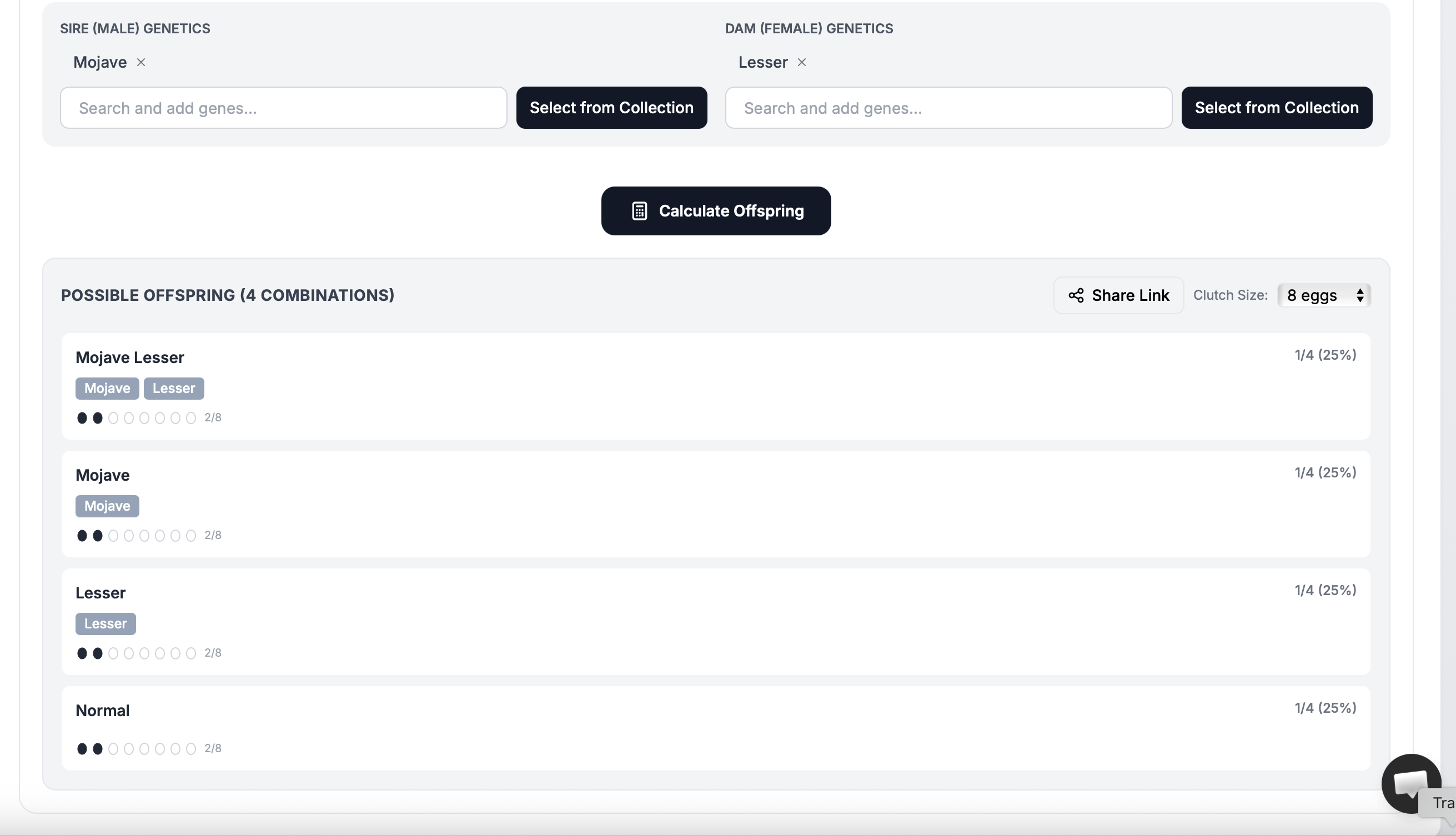
Want to see what two morphs produce together?
Run Any Pairing Through the Genetics Calculator
THE RACK's free genetics calculator shows offspring probabilities for any morph combination.
Try the Free CalculatorHow Ball Python Genetics Determine Morphs
Every ball python carries two copies of each gene: one from each parent. A genetics calculator automates the math and shows the full range of possible offspring from any pairing. This is the foundation of every breeding project.
How to Identify Your Ball Python's Morph
Tips for morph identification:
- Start with the base color. Warm tones suggest Pastel, Enchi, or Fire. Cool tones point toward Axanthic or Banana.
- Look at the pattern. Clean and reduced (Pinstripe), busy and web-like (Spider), or broken with white sections (Piebald).
- Check the eyes. Red or pink eyes indicate Albino. Blue eyes on a white snake indicate BEL complex.
- Check the belly. Clean white belly is a strong indicator of Mojave, Lesser, or other BEL complex genes.
- Ask the breeder. Reputable breeders provide full genetic information with every sale.
THE RACK's lineage tracking records every gene in your collection and ties it back to the parents and breeder of origin.
Identification Tip
When buying a morph, always ask for the full genetic breakdown including hets. A visual Pastel het Clown het Piebald looks identical to a regular Pastel, but the hidden genes are where the breeding value lives.
Frequently Asked Questions
What Is the Most Popular Ball Python Morph?
Pastel is the most widely produced. For pet owners, the Blue Eyed Leucistic (BEL) is one of the most in-demand. Banana, Piebald, and Clown are consistently popular across both markets.
Can You Breed Two Different Morphs Together?
Yes. Breeding two different morphs together is the foundation of the designer morph market. Use a morph calculator to see expected offspring ratios.
How Do I Know If My Ball Python Is Het for Something?
Het status cannot be determined by looking at the snake. It is confirmed through breeding records or proven by producing visual offspring. Buying from a reputable breeder who provides full genetic documentation is the most reliable method.
Built by a Breeder
Every Gene. Every Pairing.
One Platform.
Genetics calculator. Pairing probabilities. Lineage tracking. Gene inventory. THE RACK manages the genetics side of your program so nothing gets lost between seasons.
See THE RACKFree for up to 5 animals. Keeper $10/mo. Breeder $20/mo. 7-day money-back guarantee.