
News / Designer Ball Python Morphs Explained
Designer Ball Python Morphs Explained
- Designer morphs are built through deliberate multi-generation pairings, not discovered by accident.
- Recessive genes drive the most valuable long-term projects. Two hets give 25% odds per egg of hitting a visual.
- Foundation genes like Pastel, Enchi, and Fire are tools. The combinations you build with them are the product.
- Quad-recessive visuals can take years of planning. Tracking lineage across generations is what separates focused projects from random collecting.
Ball python morphs built this entire industry. They are the language breeders use to express creativity and discipline at the same time. Each gene, pattern, and shade of color tells a story about intent. Morphs are not fashion. They are legacy projects. The goal is not to own everything. It is to perfect what works and strip away what does not.
Understanding the Types of Morphs
Every ball python morph fits into one of three genetic categories. Knowing where a gene belongs changes how you plan pairings.
- Dominant. One copy shows the trait. Two copies look the same. Examples include Spider and Pinstripe.
- Co-dominant (incomplete dominant). One copy changes color or pattern. Two copies amplify it, often labeled as "super." Think Pastel or Yellowbelly.
- Recessive. Hidden unless the snake has two copies. These drive long-term projects: Clown, Desert Ghost, Axanthic, Pied, Hypo.
The rarest, most valuable animals are usually recessive combinations that took years of selective pairing to build. A genetics calculator previews offspring outcomes from any pairing, showing the probabilities for every possible combination before you commit.
KEY CONCEPT
Recessive projects take patience. Two hets give you 25 percent odds per egg of hitting a visual. That is why the long game separates hobbyists from program builders.
Foundation Genes Every Breeder Should Know
Pastel brightens base color. Yellowbelly enhances flames. Enchi smooths patterns. Leopard adds darkness and contrast. Spotnose sharpens pattern edges. Fire cleans and brightens everything it touches. These are the tools. What matters is how you combine them with purpose.
Why Axanthic Lines Matter
Axanthic removes all warm pigments, leaving shades of gray, silver, and black. Several lines exist: VPI, MJ, Jolliff, and TSK (The Snake Keeper). Each produces slightly different expressions of the same recessive trait.
When combined with Desert Ghost, Axanthic creates some of the cleanest black-and-white visuals in existence. Selective breeding can slow the natural color shift that occurs as Axanthic animals age. Choosing animals that hold contrast past year two keeps the line crisp across generations.
Recessive Powerhouses
If you are serious about designer projects, these genes matter most: Clown, Desert Ghost, Puzzle, Hypo, and Pied. Each one adds a distinct visual element that becomes more dramatic when stacked with other recessives.
Two-gene visuals used to be elite. Now the benchmark is triple and quad recessive combinations. These projects require years of discipline and precise record-keeping. When you hit one, the result is unmistakable.
Designer morphs are built, not found.
Designer Combinations That Change the Game
Breeding recessive genes together is where the art begins. Axanthic and Desert Ghost deliver black-and-white perfection. Clown adds intricate structure and strong head patterns. Desert Ghost, Clown, and Axanthic together redefine monochrome.
The quad-het project, stacking Axanthic, Desert Ghost, Clown, and Puzzle, represents the modern benchmark. Building it takes years of deliberate selection. Every holdback female pushes the line forward toward that goal.
The Market Reality
Morph value follows rarity, visual appeal, and demand. Recessive combinations hold value because they cannot be mass-produced quickly. A single quad-het project can take years to hit a visual. That barrier protects value for breeders who plan ahead.
Tracking breeding records and offspring outcomes across seasons provides the data to refine pairing decisions. Which combinations produce the strongest visuals, the cleanest expressions, and the highest genetic value becomes clear over time.
How to Build Your Own Designer Line
Start with direction, not random genes. Pick the recessives you want to work toward and build backward from the goal. Every animal in the program should connect to the end vision.
- Define the target combination before buying the first animal
- Keep detailed records of every pairing and offspring
- Evaluate visuals honestly across multiple generations
- Stay patient because recessive work rewards discipline, not speed
The breeders who last think in generations. Each season's holdbacks build toward a result that shows years later. That is the difference between chasing trends and building a program.
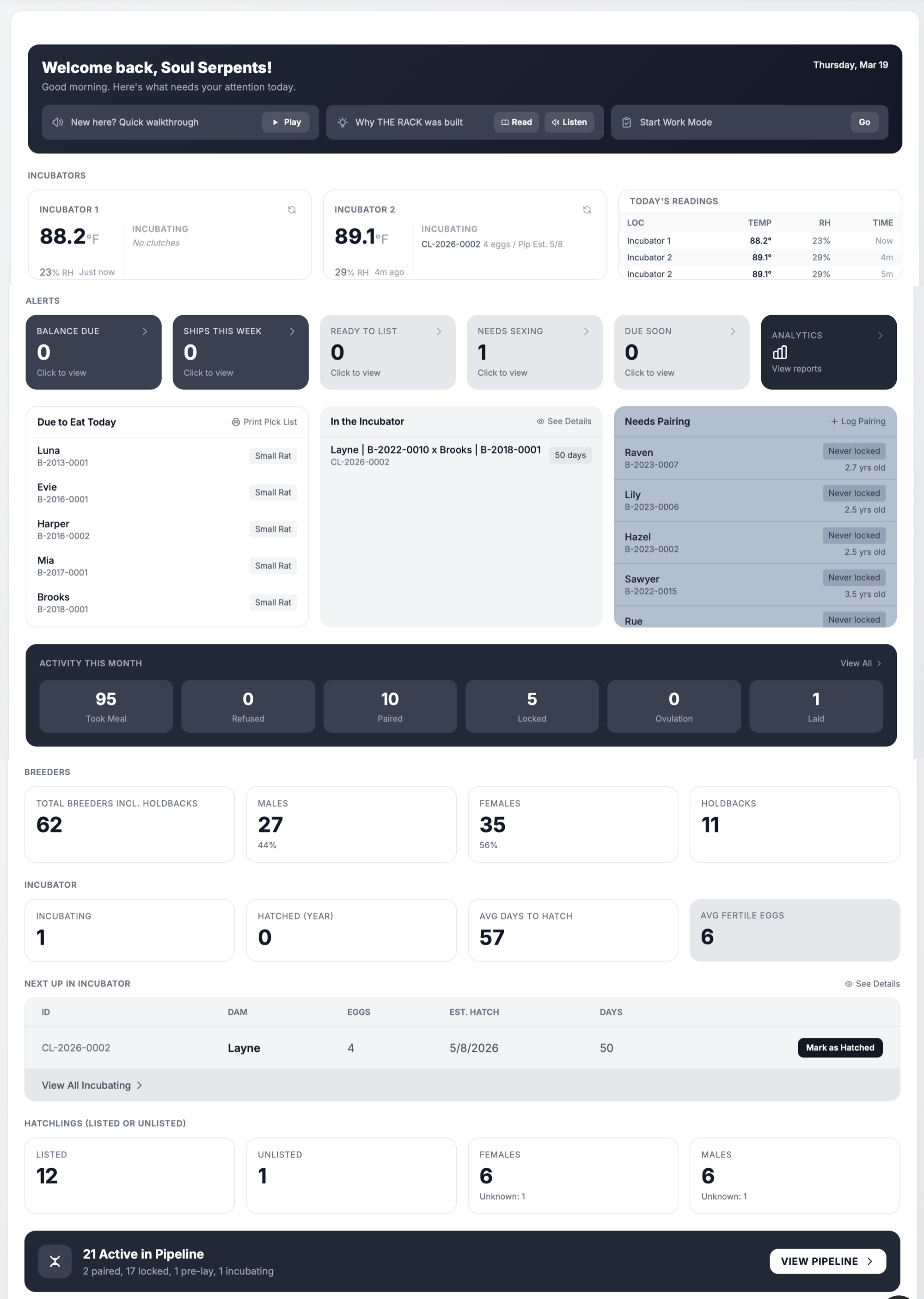
Want to preview any pairing before you commit?
See Every Possible Outcome.
Plan Every Pairing.
THE RACK's genetics calculator shows offspring probabilities for any ball python pairing. Free to use. No account required.
Try the CalculatorWhat Defines a Designer Morph
A designer morph should have clarity, consistency, and longevity. It is not about creating volume. It is about control over expression, contrast, and long-term genetic health. The best designer animals carry recessive foundations refined through years of selective pairing.
Clean visuals do not happen by chance. Tracking color shift across years of holdbacks reveals which animals age cleanly and which fade. That data drives the selection pressure that keeps a line sharp.
THE LONG GAME
Start with direction. Keep records. Evaluate honestly. Stay patient. The breeders who last think in generations, not seasons.
Built by a Breeder
Plan the Pairing.
Build the Legacy.
Genetics calculator. Breeding logs. Offspring tracking. The tools that turn morph projects into multi-year programs.
See THE RACKFree for up to 5 animals. Keeper $10/mo. Breeder $20/mo. 7-day money-back guarantee.