
News / How to Switch Your Ball Python from Live to Fro...
How to Switch Your Ball Python from Live to Frozen-Thawed
- Frozen-thawed is safer for the snake, cheaper in bulk, and easier to manage at scale.
- Temperature is everything. Warm the prey to ~100F. A cold or lukewarm rodent gets refused.
- Most ball pythons convert in 1-4 attempts. Stubborn feeders need braining, scenting, or alternate prey species.
- Never offer live the day after a refusal. Consistency is what converts holdouts.
Most ball pythons will eat frozen-thawed prey. The ones who refuse need a strategy, not force. This guide walks through the full transition process, from why F/T is the better option to the specific techniques to get stubborn feeders to switch.
In This Guide
Why Frozen-Thawed Is the Standard
Live rodents bite. A live rat left unattended in an enclosure for even a few minutes can leave wounds taking weeks to heal and leave permanent scars. This is not a rare scenario. It happens regularly, and the injuries can be severe enough to require veterinary care.
Frozen-thawed eliminates the risk entirely. Beyond safety, F/T is more practical. You buy in bulk, store in a chest freezer, and pull what you need on feeding day. No pet store trips. No keeping live rodent colonies unless you choose to. No worrying about availability.
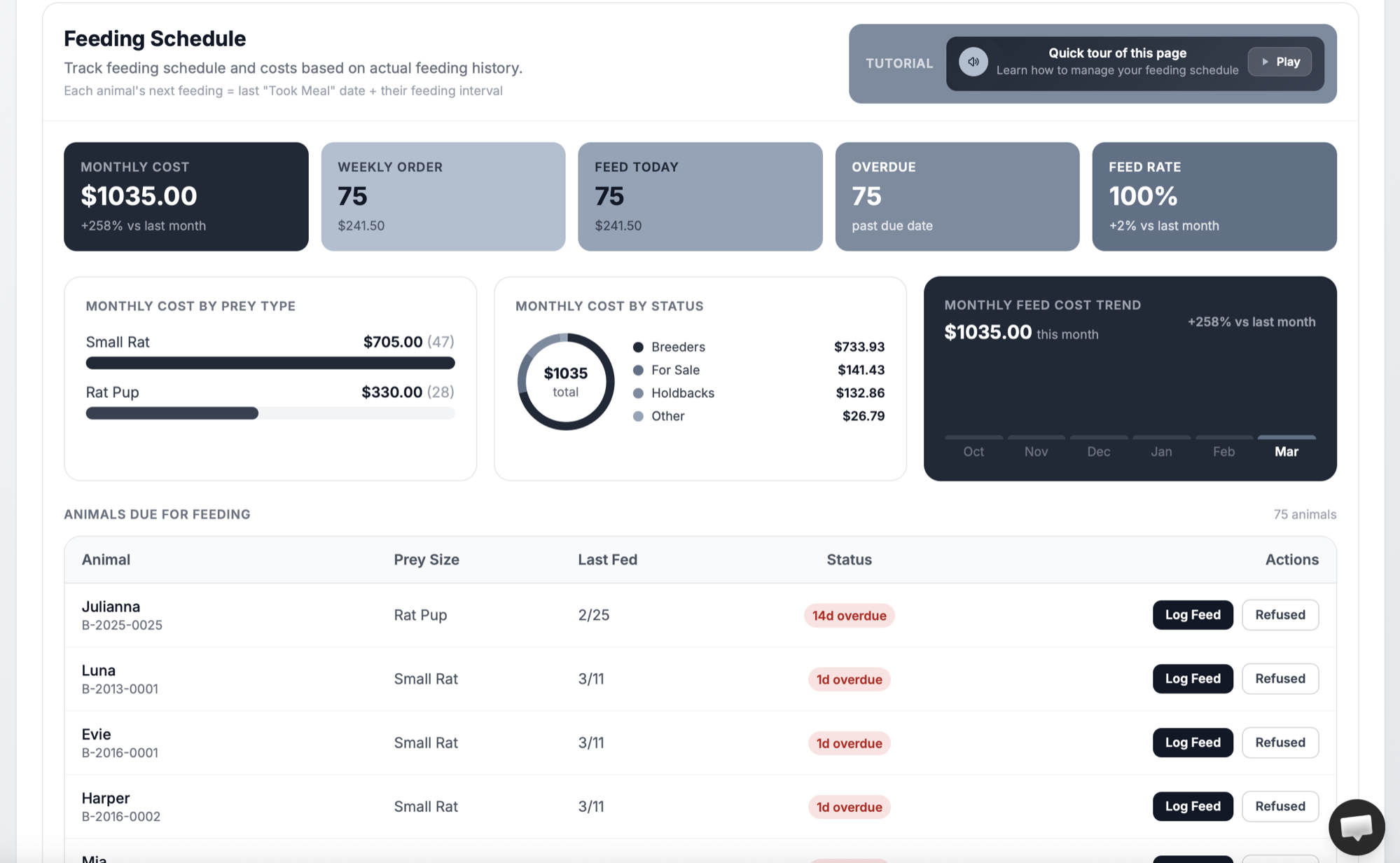
For breeders running a facility, F/T scales. When you are feeding dozens of animals on a schedule, the ability to pull a week's worth of prey from the freezer and thaw in batches is the difference between a 30-minute task and a multi-hour ordeal. Feeding logs in THE RACK make this even cleaner; every feed, every refusal, every prey size gets recorded so you can spot patterns and keep your schedule tight.
Want every feed logged and every refusal tracked?
Feeding Logs Built For Your Workflow
THE RACK records every feed, refusal, and prey type. When a snake is mid-transition, the data tells you what is working and what is not.
See Feeding ToolsBefore You Start: Set Up for Success
The transition works best when you control the variables. Before offering the first F/T meal, get a few things in order.
Check Your Husbandry
A snake with suboptimal temperatures or humidity is already less likely to eat. Hot side should be 88-92F. Cool side 76-80F. Humidity 55-65%. Hides on both sides. If any of these are off, fix them first. A snake will not switch prey types when its environment is stressing it out.
Stock Your Freezer
Buy frozen rodents in bulk from a reputable supplier. You want the same size prey the snake currently eats live. Having multiple prey types on hand (rats, mice, African soft-furred rats) gives you options if the first offering gets refused.
Pick the Right Time
Start the transition when the snake is actively feeding, not during a seasonal fast or shed cycle. A hungry snake is a cooperative snake. If your ball python has been eating live on a consistent 7 to 14-day schedule and is due for a meal, this is your window.
Key Principle
The goal is to make the frozen-thawed prey as appealing as possible, not to starve the snake into compliance. Patience and technique convert more snakes than hunger does.
The Step-by-Step Transition
Thaw and Warm Properly
Pull the frozen rodent from the freezer and place it in a sealed plastic bag. Submerge in warm water for 20-30 minutes until fully thawed and warmed to roughly 100F. Temperature matters more than anything else in this process.
Dry the Prey
Pat the rodent dry with a paper towel. A soggy, dripping rat is less appealing. You want the fur dry and the body warm.
Offer at Dusk
Ball pythons are crepuscular. Turn the room lights off or dim them. Wait 15-20 minutes, then offer the prey.
Use Tongs and Simulate Movement
Hold the prey with long feeding tongs. Present it near the hide entrance, about 6-8 inches from the face. Gently jiggle in small, slow movements to trigger the strike response.
Leave It Overnight
If refused from tongs, place the thawed prey on a small dish near the snake's hide. Turn out all lights and leave the room. Many ball pythons eat overnight when left alone.
If Refused, Wait and Try Again
Do not offer live the next day. Wait a full feeding cycle (7-14 days) and repeat with F/T. Offering live after a refusal teaches the snake holding out works.
Patience converts more snakes than hunger does.
Techniques for Stubborn Feeders
Some ball pythons need more convincing. Here are the secondary strategies, in order of escalation.
Brain the Prey
Make a small incision in the top of the rodent's skull to expose brain matter. This sounds unpleasant, but it releases a strong scent triggering feeding responses in reluctant snakes. It is one of the most effective techniques for converting holdouts.
Try a Different Prey Species
If the snake was eating live rats, try a frozen-thawed mouse or African soft-furred rat (ASF). Sometimes the scent profile of a different species is enough to get a first strike on F/T. Once the snake is eating F/T consistently with the alternate species, you can transition back to rats.
Scent the Prey
Rub the F/T rodent against a live rodent's bedding, or place the thawed prey in a bag with used substrate from a rodent enclosure. The live scent on a thawed item can bridge the gap for snakes keying in on smell rather than movement.
Warm It Hotter
Use a hair dryer on low heat to warm the prey's head and body to a few degrees above the surrounding air. The temperature contrast makes the prey item "glow" to the snake's heat pits. Do not overheat; you want warm, not cooked.
Offer in a Small, Dark Space
Place the snake in a small, opaque container (a clean deli cup or small tub with ventilation holes) with the thawed prey. The confined space, darkness, and close proximity to the prey item can trigger a feeding response in snakes distracted or defensive in their enclosure.
Want to see which snakes are mid-transition?
Log Every Feed, Spot Every Pattern
THE RACK's feeding log captures prey type, acceptance, and refusals. When you are converting a stubborn feeder, you can look back and see what worked.
See Feeding ToolsHow Long Does the Transition Take?
Most ball pythons convert within 1-4 attempts. Some take longer. A snake eating live for years could need 6-8 weeks of consistent F/T offerings before it switches. This is normal.
The key is consistency. Offer F/T on every scheduled feeding day using the techniques above. Do not alternate between live and frozen. Each time you offer live after a refusal, you reset the process.
What If It Never Switches?
A small percentage of ball pythons will not eat frozen-thawed no matter what you try. If you have spent 2-3 months using every technique on this list and the snake is losing weight, feeding live under supervision is an acceptable choice. Safety is the priority, for the snake and for you.
Supervise every live feeding. Never leave a live rodent unattended. Remove the rodent if the snake does not eat within 15-20 minutes.
Why This Matters at Scale
If you are running a breeding facility, feeding live to multiple animals is a logistical and safety problem. Sourcing live feeders weekly, supervising every feeding session, and managing the injury risk across a room full of snakes adds hours to your week.
F/T simplifies everything. Bulk order once a month. Pull from the freezer. Thaw in batches. Feed. Record it. Move on. The time saved compounds, and the safety difference is not small. A single bite wound needing veterinary care costs more in money and stress than a year's worth of frozen rats.
The Scale Factor
A single rodent bite wound can cost more in vet bills and recovery time than a full year of frozen-thawed prey. F/T is not a preference. It is a facility management decision.
Common Mistakes During the Transition
- Offering prey too cold. This is the number one reason F/T gets refused. Warm it thoroughly.
- Offering live the day after a refusal. This rewards the holdout behavior and extends the transition.
- Thawing in the microwave. Microwaves heat unevenly, creating hot spots and cold spots. The prey can burst. Use warm water.
- Handling the snake before feeding. Give the snake at least 24 hours of no handling before an F/T attempt.
- Feeding in bright light. Ball pythons feed at dusk. Dim the lights or turn them off.
- Giving up too early. Three refusals is not a pattern. Eight weeks of consistent offerings is a pattern.
Content verified against THE RACK breeding database. Feeding transition data and refusal patterns sourced from active breeder programs. Last reviewed April 2026.
Built by a Breeder
Every Feed,
Every Animal, Logged
Feeding logs. Refusal tracking. Prey type history. Bulk feeding tools. THE RACK keeps your feeding program organized so you can focus on the animals.
See THE RACKFree for up to 5 animals. Keeper $10/mo. Breeder $20/mo. 7-day money-back guarantee.