
News / Piebald Ball Python: Genetics, Breeding & Care
Piebald Ball Python: Genetics, Breeding & Care
- Piebald is simple recessive. Both parents must carry at least one copy for visual Pieds to appear in the clutch.
- White percentage is polygenic and cannot be controlled precisely. High-white parents can produce low-white offspring.
- Het Pied x Het Pied gives 25% visual Piebald, 50% het Pied, 25% normal per egg.
- Piebald combines well with almost every color morph, making it one of the most versatile recessive genes for breeding projects.
The Piebald ball python is one of the most recognizable and sought-after morphs in the hobby. Bright white patches contrasting with normal or morph-colored sections create an appearance no two animals share exactly the same way. Whether you are looking to buy your first Pied or planning a breeding project around this gene, understanding the genetics behind the pattern is the starting point.
In This Guide
What Makes a Piebald a Piebald
The Piebald gene affects pigment distribution. Instead of coloring the entire body, the gene causes large sections of the snake to develop without pigmentation, resulting in pure white patches. The colored portions retain their normal pattern and pigment. The result is a snake split between white and patterned sections in a ratio unique to each individual.
Piebald was first proven in captivity by Peter Kahl in 1997. Since then, it has become one of the most established and widely bred recessive morphs in the ball python world. Its popularity has not faded because the visual impact never gets old. A high-white Pied stops people in their tracks at an expo in a way very few other morphs can match.
High White vs Low White
One of the most common questions about Piebalds is what determines the amount of white. The short answer: it varies, and breeders cannot control it with precision.
- High-white Piebalds have 80% or more of their body covered in unpigmented white. Some are nearly all white with small islands of color, often concentrated near the head and tail.
- Low-white Piebalds have smaller patches of white, sometimes limited to the belly or lower third of the body. The pattern sections dominate.
- Mid-range Piebalds fall somewhere in between, with a roughly even split of white and colored sections.
The white percentage is not controlled by a separate gene. It appears to be polygenic, meaning multiple genetic factors influence where and how much white develops. Two high-white parents can produce low-white offspring, and two low-white parents can surprise you with a high-white baby. Selectively breeding high-white to high-white over multiple generations can push the average higher, but there are no guarantees on any individual animal.
Genetics Note
Piebald is a simple recessive trait. Both parents must carry at least one copy of the gene for visual Pieds to appear in the clutch.
Piebald Genetics: How Inheritance Works
Piebald follows simple recessive inheritance. This means an animal needs two copies of the Pied gene, one from each parent, to display the visual Piebald phenotype. An animal with one copy is called heterozygous for Piebald, or "het Pied." Het Pieds look completely normal. You cannot tell a het Pied from a normal ball python by appearance alone.
Common Pairings and Expected Outcomes
The odds depend entirely on what each parent carries:
- Visual Pied x Visual Pied: 100% visual Piebald offspring. Both parents have two copies of the gene, so every offspring inherits one from each parent.
- Visual Pied x Het Pied: 50% visual Piebald, 50% het Pied. Every offspring gets one copy from the visual parent. The het parent passes on the Pied gene half the time.
- Het Pied x Het Pied: 25% visual Piebald, 50% het Pied, 25% normal (no copies). This is the classic het x het pairing and the one most breeders start with.
- Het Pied x Normal: 0% visual Piebald. 50% het Pied, 50% normal. No visuals, but you are producing hets to use in future pairings.
These are statistical probabilities, not guarantees per clutch. A het x het pairing with six eggs has a 25% chance per egg of producing a visual Pied. You could hatch four visuals or zero. Across enough clutches, the ratios approach the expected percentages.
If you want to see the exact odds for any pairing you are planning, run it through the morph calculator in THE RACK. Plug in both parents and see every possible outcome with its probability.
Planning a Piebald project?
See Your Pairing Odds Instantly
THE RACK's Genetics Engine calculates offspring probabilities for any pairing. Visual percentages, het ratios, and combo outcomes in seconds.
Try the CalculatorProving Out Hets
Because het Pieds are visually indistinguishable from normals, proving an animal carries the gene requires breeding trials. If you purchase a "het Pied" from a breeder, you are trusting their records and lineage tracking. Reputable breeders provide lineage documentation showing the parents of the animal and their genetics.
To prove out a suspected het Pied through breeding:
- Pair het Pied to visual Pied: If any offspring are visual Piebalds, both parents are confirmed carriers. The het parent is proven. This is the fastest method.
- Pair het Pied to het Pied: If any offspring are visual, both parents are proven hets. With a 25% expected visual rate per egg, you need a few clutches to be confident if no visuals appear.
- Pair suspected het to known het or visual: If no visuals appear across multiple clutches, the probability the animal is het decreases. After enough non-visual offspring, most breeders consider the animal "not proven" rather than confirmed non-het, because small sample sizes leave room for statistical variance.
Accurate lineage tracking is the backbone of any het-heavy project. If you cannot trace an animal's parentage, the het status is a guess.
Every Piebald is one of one. The pattern never repeats.
Piebald Combos: Stacking Genes
One reason Piebald remains so popular among breeders is how well it combines with other morphs. Because Pied affects pattern distribution rather than color, layering it with color-altering genes creates some of the most striking combos in the hobby.
- Pastel Piebald: The colored sections become brighter with reduced dark pigment. A clean, high-contrast animal.
- Clown Piebald: Both recessive traits need to be homozygous. The result combines the Clown pattern mutation with Pied's white patching. Rare and in high demand.
- Banana Piebald: Lavender and yellow tones in the colored sections against bright white patches. One of the most popular combo morphs on the market.
- Black Pastel Piebald: Deep, dark colored sections with stark contrast against the white. A clean, bold look.
- Enchi Piebald: Enchi brightens and intensifies the colored portions. Combined with Pied's white, the contrast is sharp.
Multi-gene Piebald projects take time. If you are working with two recessive traits, you need animals homozygous for both, which means multiple generations of breeding and careful record keeping. The genetics calculator lets you see what percentage of a clutch will carry both genes, helping you plan how many pairings and seasons a project will require.
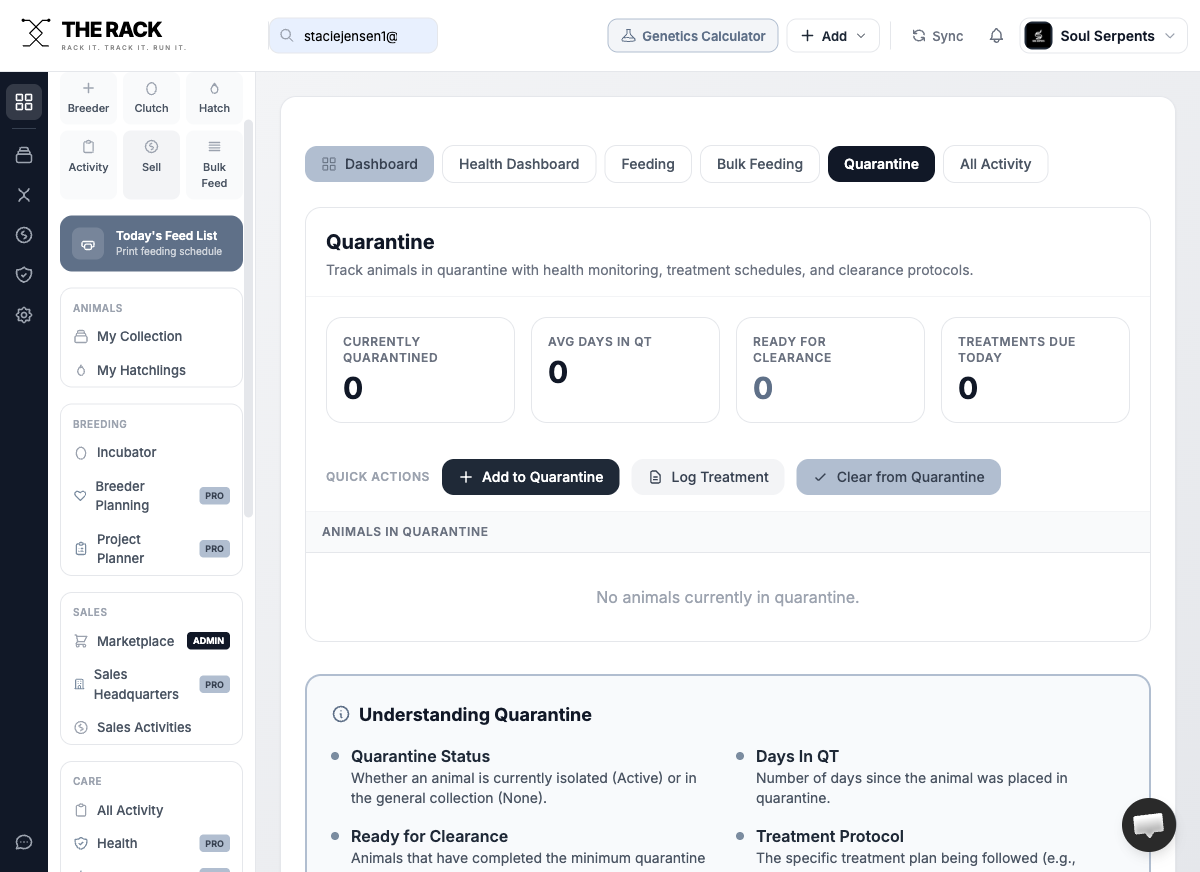
Want to see every possible outcome before you pair?
Run Any Pairing Through THE RACK's Genetics Engine
Plug in both parents. See visual odds, het percentages, and combo probabilities for every gene in the pairing. No guesswork.
Try the CalculatorKeeping a Piebald Ball Python
Piebald ball pythons do not have special care requirements compared to a normal ball python. The Pied gene affects pigment distribution only. It does not impact temperament, feeding response, health, or lifespan. Standard ball python husbandry applies:
- Warm side 88 to 92F, ambient 78 to 82F
- Humidity 55 to 70%, higher during shed
- Appropriately sized prey every 7 to 14 days depending on age
- Secure enclosure with at least two hides
- Fresh water available at all times
Some keepers notice their white-heavy Piebalds show dirt or substrate stains more visibly on the white sections. This is cosmetic. A proper shed will clear any surface discoloration. Do not bathe the snake to clean stains; maintaining correct humidity handles shedding naturally.
Buyer's Note
Piebald ball pythons carry a wide price range depending on white percentage, combo genes, and breeder reputation. Research before you buy.
Is a Piebald Project Worth It?
Piebald has been a staple of the ball python hobby for over 25 years. It is not a trend. Demand remains strong across keeper and breeder markets because the visual appeal is universal and the gene combines well with almost everything. For breeders, a well-planned Pied project produces animals that sell consistently. For keepers, a Piebald is the kind of animal you keep for decades and never get tired of looking at.
The investment depends on your starting point. If you already have het Pieds in your collection, you are one pairing away from visuals. If you are starting from scratch, purchasing a proven breeding pair or a visual female and het male gets you producing in one season.
Plan your project from acquisition through production in facility management software built for breeders. Know your genetics, know your odds, and let the data guide your decisions.
Content verified against THE RACK breeding database. Genetics outcomes and inheritance ratios verified against THE RACK gene engine. Last reviewed April 2026.
Built by a Breeder
Plan the Project.
Know the Odds.
Genetics engine. Morph calculator. Pairing odds. Lineage tracking. All in one place.
See THE RACKFree for up to 5 animals. Keeper $10/mo. Breeder $20/mo. 7-day money-back guarantee.