
News / Quarantine Protocols That Actually Work
Quarantine Protocols That Actually Work
- Minimum quarantine is 90 days. Two weeks is not enough. Many problems surface after week two
- Separate room, dedicated equipment. Nothing from quarantine touches your main collection. Not tools, not uneaten prey, nothing
- Paper towel substrate only. You need to see mites, stool, and discharge clearly
- Service main collection first, quarantine last. Change clothes and wash hands between areas
- If you add a new animal to quarantine, the clock resets for everyone in quarantine
- Consider PCR testing for nidovirus for high-value collections. Asymptomatic carriers can devastate a program
Every breeder has heard the quarantine lecture. Few follow it properly. Then they lose animals to preventable disease spread. Quarantine is not paranoia. It is insurance. Here is how to do it right.
In This Guide
Why Quarantine Matters
When you acquire a new snake, you do not know its history. Even from reputable breeders, animals can carry pathogens without showing symptoms. Mites, respiratory infections, parasites, and viruses can all be present in apparently healthy snakes.
The purpose of quarantine is simple: keep the new animal isolated long enough for problems to reveal themselves before they spread to your established collection.
One snake with mites introduced to a rack can infest dozens of animals within weeks. One asymptomatic carrier of nidovirus can devastate a collection. These are not hypotheticals. They happen constantly to breeders who skip or shortcut quarantine.
Never lose track of a quarantine timeline
Log Intake Dates. Track Health Checks. Know When They Clear.
THE RACK tracks quarantine status per animal with intake dates, health observations, and feeding records in the Activity Log. When you are running quarantine on multiple animals acquired at different times, organized records are the difference between confidence and guessing.
See Health ToolsThe Quarantine Setup
Location. The quarantine area should be physically separated from your main collection. Ideally a different room. If that is not possible, the opposite side of the house. Never in the same room as established animals.
Enclosure. Use a simple setup. A plastic tub with ventilation, a hide, water dish, and heat source. Paper towel or newspaper substrate only. No fancy decor. The goal is easy cleaning and clear observation.
Paper substrate lets you spot mites immediately. Those tiny black dots show up clearly against white. You will also see stool clearly for monitoring digestive health.
Dedicated equipment. The quarantine area needs its own tools. Separate water dishes, tongs, hooks, and cleaning supplies. Nothing from quarantine ever touches the main collection. This includes uneaten prey. If a quarantine animal refuses a rodent, throw it away. Do not offer it to another snake.
Duration: How Long Is Long Enough
This is where people cut corners. They wait two weeks, see nothing wrong, and move the animal in.
Minimum quarantine: 90 days (3 months).
Some pathogens take weeks to show symptoms. Mites can hide and reappear. Respiratory infections can smolder before becoming obvious. Three months gives most problems time to surface.
During these 90 days, you are watching for:
- Mites (check around eyes, under chin, in water dish)
- Respiratory signs (wheezing, mucus, open-mouth breathing)
- Abnormal stool (runny, discolored, foul-smelling)
- Regurgitation
- Skin issues (stuck shed, scale rot, blisters)
- Neurological symptoms (stargazing, corkscrewing)
- General condition (weight loss, lethargy)
The Nidovirus Question
Nidovirus (now sometimes called serpentovirus) is a serious respiratory pathogen that has spread through ball python collections in recent years. It causes pneumonia and is often fatal.
The problem: infected snakes can be asymptomatic carriers for months or longer. They look perfectly healthy while capable of spreading the virus.
Some breeders now recommend 12-month quarantine because of nidovirus. Others rely on testing.
If you are serious about biosecurity, consider PCR testing for nidovirus. A swab can be sent to labs like Research Associates Laboratory or your reptile vet can arrange testing. Test at the beginning of quarantine and again near the end.
A negative test does not guarantee the animal is clear, but two negative tests months apart significantly reduces risk.
The Non-Negotiable
90 days minimum. Separate room. Dedicated equipment. Service your main collection first, quarantine last. This sounds excessive until you are treating 50 animals for mites.
Three months of patience
versus potential disaster.
The math is simple.
The Quarantine Protocol
Day 1: Intake exam
Before the snake goes into quarantine, inspect it thoroughly. Check for mites around the eyes, in the labial pits, under the chin, and around the vent. Look for stuck shed, wounds, mouth abnormalities, or discharge. Weigh the animal and record it.
First 2 weeks: Observation only
Minimal handling. Let the snake settle. Watch for mites daily. Monitor for respiratory sounds. Do not offer food for the first 5-7 days to reduce stress.
Week 2-4: First feeding attempts
Offer appropriately sized prey. Record whether the snake eats and any notes about feeding behavior. Continue mite checks.
Month 2-3: Continued monitoring
By now, most obvious problems will have appeared. Continue regular feeding, weight tracking, and observation. If you are testing for nidovirus, the second test can be done around week 10-12.
Day 90+: Evaluation
Has the snake eaten consistently? Maintained or gained weight? Shown no symptoms of illness? If yes to all, and any testing came back negative, the animal can be considered for integration.
Biosecurity Practices During Quarantine
Order of operations. Always service your established collection first, quarantine animals last. Never go from quarantine back to your main collection without changing clothes and washing hands thoroughly.
Hand hygiene. Wash hands before and after handling any quarantine animal. Some breeders use disposable gloves. At minimum, use hand sanitizer between animals and thorough soap-and-water washing after quarantine work.
Clothing. If you are handling quarantine animals, change your shirt before entering your main collection room. Mites can hitch rides on fabric.
Foot traffic. If you have been to a reptile expo, pet store, or another breeder's facility, change clothes and shower before entering your snake room. This sounds excessive until you are treating 50 animals for mites.
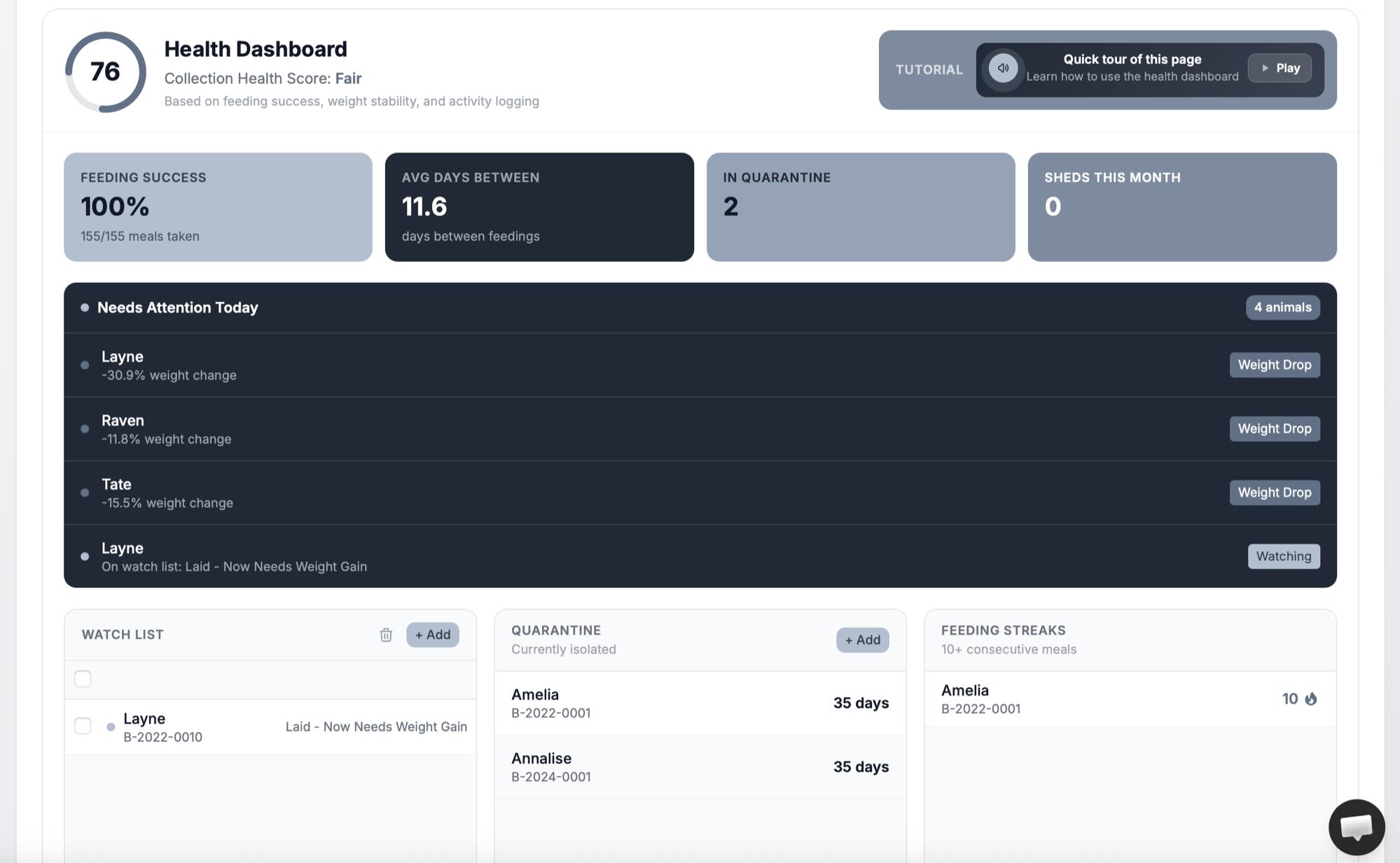
Every observation in one place
Mite Checks. Feeding Records. Quarantine Timeline.
THE RACK is ball python facility management software built by a breeder. The Activity Log keeps a complete history per animal: when you checked for mites, what you found, when you offered food, whether it ate. Set status to "Quarantine" and always know which animals are cleared and which are still in isolation.
See Activity LogWhat If Something Shows Up
If you find a problem during quarantine, that is the system working.
Mites: Treat immediately. Quarantine clock restarts after treatment. The animal stays isolated until you have confirmed the mites are gone and have not returned for at least 4-6 weeks.
Respiratory symptoms: Vet visit. Do not integrate until fully recovered and cleared. Consider nidovirus testing if you have not already.
Parasites: Fecal testing and treatment. Quarantine extends until follow-up fecals are clean.
Positive nidovirus test: This animal cannot join your collection. Ever. You will need to decide whether to maintain it permanently isolated or euthanize. Harsh, but necessary to protect your other animals.
The Reset Rule
If you add another new animal to your quarantine area, the clock resets for all animals in quarantine. The newest arrival could potentially infect the others. Everyone starts the 90-day count over.
This is why experienced breeders batch their acquisitions. Buy what you need, quarantine together, then close the door until they are cleared.
Quarantine for Returning Animals
Animals that leave your facility and return need quarantine too. A snake that went to a show, was loaned to another breeder, or was sold and returned should be treated as a new acquisition. You do not know what it was exposed to.
The Shortcuts That Fail
"The breeder is reputable." Good breeders still have animals that carry pathogens without symptoms. Trust does not eliminate biology.
"It looks healthy." Many diseases have asymptomatic periods. Looking healthy today does not mean healthy tomorrow.
"I will keep it on the other side of the room." Mites can travel. Airborne pathogens exist. Same room is not isolation.
"Two weeks is fine." It is not. Problems frequently appear after the two-week mark.
The Real Cost of Skipping Quarantine
Treating a mite infestation across 30 animals takes weeks of daily work. Losing multiple animals to a respiratory outbreak is financially and emotionally devastating. Discovering your collection has nidovirus can end a breeding program entirely.
Three months of patience versus potential disaster. The math is simple.
Summary Protocol
- Separate room or area from main collection
- Simple setup: tub, paper substrate, hide, water, heat
- Dedicated equipment that never crosses to main collection
- Minimum 90 days isolation
- Daily mite checks for first month
- Service quarantine animals last, main collection first
- Hand washing and clothing changes between areas
- Consider nidovirus testing for high-value collections
- Clock resets if new animals enter quarantine
- Do not integrate until eating well, maintaining weight, symptom-free
Quarantine is boring. It requires patience. It takes space and extra equipment. It is also the single most effective thing you can do to protect your collection.
Managing Multiple Quarantine Timelines
When you are running quarantine on three animals acquired at different times, tracking gets complicated. When did that one come in? Has it been 90 days yet? Did I do the second mite check?
THE RACK tracks quarantine status as part of each animal's profile. Log the intake date, record health observations, note feeding attempts. The Activity Log keeps a complete history: when you checked for mites, what you found, when you offered food, whether it ate. Set the status to "Quarantine" and you will always know which animals are cleared and which are still in isolation.
When everything is in one place, nothing slips through. No guessing whether it has been 60 days or 90. No forgetting which animal had the suspicious sneeze last week. Clear records that protect your collection.
Content verified against THE RACK breeding database. Quarantine protocols sourced from active breeder programs and veterinary biosecurity guidelines. Last reviewed April 2026.
Built by a Breeder
Protect Your Collection.
Track Every Animal.
Quarantine status. Health observations. Activity logs. Weight tracking. THE RACK manages biosecurity alongside your entire breeding operation.
See THE RACKFree for up to 5 animals. Keeper $10/mo. Breeder $20/mo. 7-day money-back guarantee.