
News / Epigenetics in Ball Pythons: What Breeders Need...
Epigenetics in Ball Pythons: What Breeders Need to Know
- Epigenetics means changes in gene expression without altering DNA. The genes stay the same; what changes is whether they are turned on or off.
- Clear tubs producing calmer hatchlings is habituation, not epigenetics. It is behavioral conditioning that resets with every new generation.
- Incubation temperature does affect phenotype expression in ball pythons. Whether the mechanism is truly epigenetic at the molecular level remains unconfirmed.
- Maternal stress hormones can deposit into eggs. Good husbandry goes beyond egg viability; it influences the animals that hatch from those eggs.
A breeder tells you they raise hatchlings in clear tubs because it makes them calmer. Another says incubation temperature can change how a morph looks. Someone on a forum drops the word epigenetics like it explains everything from temperament to color intensity. Some of this is real. Most of it is wrong. And the difference matters if you take your breeding program seriously.
This topic came to us from Spectral Serpents, who suggested we dig into what epigenetics means for ball python breeders. It is a great question because the word gets thrown around constantly in reptile communities, but almost never with the science behind it. So here is the full picture: what epigenetics is, what it does in ball pythons, and where breeder folklore is getting the terminology wrong.
What Epigenetics Means
Epigenetics is not a synonym for "environment affects animals." It has a specific scientific meaning. Epigenetic changes are modifications to how genes are expressed without altering the DNA sequence itself. The genes stay the same. What changes is whether they are turned on or off, and how loudly they speak.
The most studied mechanism is DNA methylation, where methyl groups attach to specific regions of DNA and silence the genes underneath. Other mechanisms include histone modifications and chromatin remodeling. These changes can be triggered by environmental signals like temperature, stress hormones, nutrition, and toxin exposure.
The critical feature that makes epigenetics different from regular environmental effects is heritability. A true epigenetic change can be passed from parent to offspring. The parent experiences something, it changes their gene expression, and that change shows up in the next generation without any change to the DNA sequence.
The Key Distinction
Genetics is the blueprint. Epigenetics is the foreman deciding which parts of the blueprint get built. Same plans, different building.
What We Know in Reptiles
In reptiles as a group, the best-documented epigenetic mechanism is temperature-dependent sex determination. In many turtle and crocodilian species, incubation temperature determines whether an embryo develops as male or female. The temperature triggers epigenetic changes that silence or activate sex-determining gene pathways. This is genuine epigenetics. It is heritable in the sense that the sex determination itself carries through to the organism's biology.
Ball pythons do not use temperature-dependent sex determination. They have genetic sex determination with a ZW/ZZ chromosome system. So that particular mechanism does not apply here.
Incubation environment does affect ball python development in measurable ways.
Incubation Temperature and Phenotype
Breeders have observed for decades that incubation temperature can influence color intensity and pattern expression in ball pythons. Animals incubated at slightly different temperatures within the viable range can show subtle differences in how bright or dark they are, how crisp their pattern edges appear, and overall color saturation.
Whether these effects are truly epigenetic at the molecular level or developmental plasticity is an open question. No peer-reviewed study has mapped DNA methylation changes to incubation temperature in Python regius specifically. What we can say is that the phenomenon is real. The mechanism behind it has not been confirmed.
Maternal Stress and Offspring
In mammals and birds, maternal stress hormones cross into the developing embryo and alter offspring behavior and stress responses. This is well-documented epigenetics. A stressed mother produces offspring with modified HPA axis development, making them more reactive to stress themselves.
In oviparous reptiles like ball pythons, there is limited evidence that yolk hormone deposition can affect hatchling behavior and physiology. A gravid female under chronic stress can deposit different levels of corticosterone into her eggs. Whether this produces measurable behavioral changes in the hatchlings has not been studied in ball pythons specifically, but the biological mechanism exists.
The practical takeaway: a healthy, unstressed female in proper conditions is likely producing healthier eggs at a hormonal level. Good husbandry goes beyond egg viability. It influences the animals that hatch from those eggs.
The genes don't change. The conversation around the genes changes.
The Clear Tub Myth
Now for the claim you have heard repeated: raising hatchlings in clear tubs makes them calmer and better behaved. This is not epigenetics. It is not even close.
What is happening is habituation. A hatchling in a clear tub sees movement constantly. People walking past, lights changing, other activity in the room. Over time, the snake stops reacting to these stimuli because it learns they are not threats. This is classical behavioral conditioning. It is the same process that makes a dog stop barking at the mailman after enough repetitions.
Habituation is a real and useful husbandry tool. But it has nothing to do with gene expression. It is not heritable. If you breed two calm, habituated adults together and raise their offspring in opaque tubs with minimal handling, those babies will not be magically calm. They will be every bit as defensive as any other unexposed hatchling.
There is also a selection bias problem. Breeders who use clear tubs to "socialize" hatchlings tend to handle them more frequently, interact with them more, and invest more time in the process. The handling is doing the work. The tub color is incidental.
What Tub Color Does Affect
Tub color does affect one thing: stress levels. And this is where it gets nuanced. A hatchling in a clear tub with no hides, no cover, and constant visual stimulation can become chronically stressed. Elevated cortisol. Defensive behavior. Feeding refusals. The clear tub is not inherently calming. It is a tool that can go either way depending on how you use it.
A hatchling in an opaque tub with proper hides, correct thermal gradient, and regular gentle handling will be every bit as well-adjusted as one in a clear tub. The variable that matters is the total husbandry package, not the container material.
If you are tracking temperament, feeding response, and handling notes across your collection, the patterns that emerge will tell you far more than tub color ever could. Which animals are consistently calm. Which are defensive feeders. Which bloodlines tend to produce handleable offspring. That is data. Not folklore.
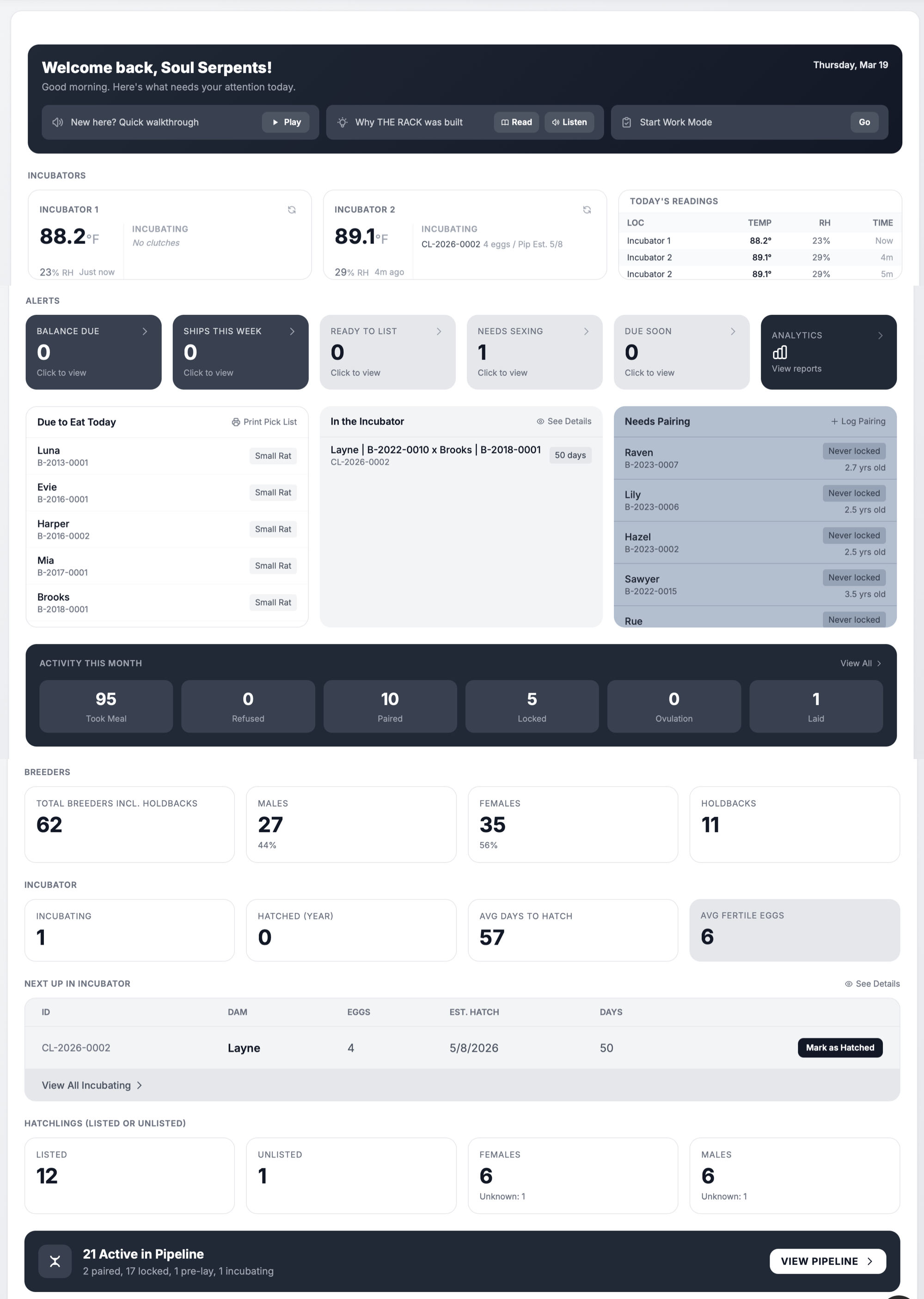
Track what matters across generations
Your breeding data tells a better story than folklore
THE RACK tracks lineage, breeding outcomes, and per-animal notes across your entire program. See which pairings produce what, and make decisions based on your own data.
See THE RACKWhere Epigenetics Might Matter for Breeders
The real frontier is not tub color. It is the questions nobody has answered yet in ball pythons but that the science supports asking.
Transgenerational Effects
In some reptile species, environmental conditions experienced by parents can affect offspring phenotype beyond direct genetic inheritance. A mother's nutrition during follicle development could influence egg composition. Chronic environmental stress across a breeding colony could alter stress response patterns in offspring through yolk hormone deposition. These are plausible mechanisms with precedent in other reptiles. Nobody has studied them specifically in Python regius.
Line-Specific Variation
Breeders have long noticed that certain bloodlines produce animals with consistently different qualities beyond what simple morph genetics would predict. One breeder's Pastels are brighter than another's. One line produces bigger animals. One line feeds more aggressively. Some of this is polygenic selection. Some of it might be epigenetic. We do not know yet.
What we do know is that tracking these patterns across generations is the only way to see them. You cannot identify a line-specific trait in a single clutch. You identify it across five years of breeding records, looking at which pairings consistently produce which outcomes.
Incubation as a Variable
If incubation temperature genuinely affects phenotype expression through epigenetic mechanisms, then your incubation records become part of your genetics data. Temperature logs, humidity readings, and duration records tied to specific clutches become predictive tools. This is why serious breeders track incubation conditions meticulously. Even if the science is not fully there yet, the data will be ready when it is.
What Science Has Confirmed in Ball Pythons
Confirmed: Incubation temperature affects phenotype expression.
Confirmed: Maternal stress hormones deposit into eggs in oviparous reptiles.
Not confirmed: Whether these effects involve DNA methylation changes in P. regius.
Debunked: Clear tubs as an epigenetic mechanism for temperament.
Why the Terminology Matters
Using the word epigenetics when you mean habituation is not a small vocabulary issue. It changes what breeders think they can control and what they think they are passing on.
If a breeder believes clear tubs create epigenetic changes, they might think they are permanently altering their line's temperament. They are not. They are conditioning individual animals, and those conditioning effects reset with every new generation. The next clutch starts from zero.
If a breeder understands the real mechanisms, they start paying attention to the things that might genuinely carry across generations: maternal health, incubation conditions, nutritional status during follicle development, chronic stress in their colony. These are the variables worth tracking. These are the variables that might, pending future research, turn out to be genuinely heritable in the epigenetic sense.
Good breeders have always known that healthy parents produce healthier offspring. Epigenetics might eventually explain part of why. But the practical advice has not changed: optimize your husbandry, track your outcomes, and let the data tell you what works.
The Bottom Line for Your Program
- Clear tubs produce habituated hatchlings, not epigenetically modified ones. Habituation is useful. Call it what it is.
- Incubation conditions likely affect phenotype expression. Track temperature and humidity for every clutch. Tie that data to outcomes.
- Maternal health matters beyond egg viability. A stressed, undernourished female can produce hatchlings with altered stress responses. Good husbandry is not optional.
- Line-specific traits are real. Whether they are polygenic, epigenetic, or both is an open question. Track them across generations either way.
- The science will catch up. Ball python molecular epigenetics is largely unstudied. When the research arrives, breeders with good records will be the ones who can apply it.
Thank you to Spectral Serpents for bringing this topic to our attention. The best content comes from the questions breeders are asking. If you have a topic you want us to dig into, reach out. If the science exists, we will find it. If it does not, we will tell you that too.
Built by a Breeder
Your data is your
breeding advantage.
Genetics calculator. Breeding records. Incubation tracking. Lineage mapping. Weight trends. All in one place.
See THE RACKFree for up to 5 animals. Keeper $10/mo. Breeder $20/mo. 7-day money-back guarantee.