
News / Ball Python Feeding Chart: Prey Size by Weight ...
Ball Python Feeding Chart: Prey Size by Weight and Age
- Feed prey weighing 10-15% of your snake's body weight. Weight is a better guide than age for sizing prey.
- Hatchlings eat every 5-7 days. Adults eat every 14-21 days. Frequency drops as the snake matures.
- Frozen/thawed is the standard feeding method. No risk of rodent bites, buy in bulk, and consistent availability.
- Ball pythons fast. Males during breeding season, females approaching ovulation, and seasonal refusals are normal biology, not emergencies.
Knowing what size prey to feed your ball python and how often to feed it is one of the most practical parts of ownership. This guide gives you a clear, weight-based feeding chart you can reference from hatchling through adulthood, plus the context behind the numbers so you understand when and why to adjust.
The Ball Python Feeding Chart
This chart organizes feeding by snake weight, which is more reliable than age. Two ball pythons of the same age can vary significantly in size depending on genetics, feeding history, and growth rate. Weigh your snake and find the corresponding row.
| Snake Weight | Age Range | Prey Type | Prey Size | Frequency |
|---|---|---|---|---|
| 40-80g | Hatchling (0-2 mo) | Mouse | Hopper mouse (8-12g) | Every 5-7 days |
| 80-150g | Hatchling (2-4 mo) | Mouse / Small rat | Adult mouse (15-20g) or rat fuzzy | Every 5-7 days |
| 150-300g | Juvenile (4-8 mo) | Rat | Rat pup (20-40g) | Every 7 days |
| 300-500g | Juvenile (6-12 mo) | Rat | Weaned rat (40-60g) | Every 7-10 days |
| 500-800g | Sub-adult (8-14 mo) | Rat | Small rat (60-90g) | Every 10 days |
| 800-1200g | Sub-adult (12-18 mo) | Rat | Medium rat (90-150g) | Every 10-14 days |
| 1200-1800g | Young adult (18-30 mo) | Rat | Medium-large rat (150-200g) | Every 14 days |
| 1800-2500g | Adult (2-4 yr) | Rat | Large rat (200-275g) | Every 14-21 days |
| 2500g+ | Adult (4+ yr) | Rat | Large-XL rat (250-350g) | Every 21 days |
Want to see what this feeding schedule costs over a full year? Our free feeding cost calculator breaks it down by prey type, size, and frequency.
How to Use This Chart
Weigh Your Snake First
Weight is a better guide than age. A 6-month-old ball python could weigh 200g or 400g depending on how it was fed and its individual growth rate. A digital kitchen scale accurate to 1g is all you need. Weigh before feeding, ideally on the same day each week, so you can spot trends over time.
The 10-15% Body Weight Rule
The prey item should weigh 10-15% of the snake's body weight. This is the single most useful guideline in ball python feeding. A 500g snake gets a 50-75g rat. A 1500g snake gets a 150-225g rat. The chart above is built around this rule.
When in doubt, aim for the lower end (10-12%). Slightly underfeeding is safer than overfeeding. A snake on a consistent schedule with appropriate prey will grow steadily without becoming obese.
Adjusting for Body Condition
The chart is a starting point. Adjust based on what you see:
- Underweight: Spine visible when viewed from above, pronounced triangle shape from the side. Increase prey size or feeding frequency slightly.
- Healthy weight: Spine not visible, rounded body cross-section, smooth transition from body to tail. Maintain current schedule.
- Overweight: Body appears round or puffy, visible fat deposits along the spine, scale spread visible between scales. Reduce prey size, extend intervals between feedings, or both.
Monitoring weight trends over weeks and months is more useful than any single weigh-in. A slow, steady upward trend is the goal for growing snakes. Adults should maintain a stable weight within a narrow range.
The Golden Rule
Feed prey weighing 10-15% of your snake's body weight. Weigh the snake. Do the math. It is the most reliable feeding guideline in the hobby.
Feeding Frequency by Life Stage
Hatchlings (0-6 Months): Every 5-7 Days
Hatchlings are growing rapidly and have high metabolic demand relative to their size. Feeding every 5-7 days with appropriately sized prey supports steady growth without power-feeding. Most hatchlings start on hopper mice and transition to rat fuzzies or pups within the first few months.
Juveniles (6-12 Months): Every 7-10 Days
Juveniles are still growing but the pace slows compared to the first few months. Feeding every 7-10 days with weaned rats or small rats keeps growth steady. This is the stage where most snakes are fully transitioned to rats.
Sub-Adults (1-2 Years): Every 10-14 Days
Growth continues to slow. Stretching the feeding interval to every 10-14 days prevents excess weight gain while still supporting healthy development. Prey size should be increasing to match the snake's growth, but frequency drops.
Adults (2+ Years): Every 14-21 Days
Adults are maintaining weight, not building mass. Feeding every 14-21 days with a medium to large rat is standard. Males tend to eat less frequently than females and go off feed more readily during breeding season. Neither is a problem as long as weight stays stable.
Breeding Females: Feeding Adjustments
Females being conditioned for breeding benefit from slightly increased feeding (larger prey or more frequent meals) in the months leading up to cycling. After laying, females are often significantly underweight and should be offered food more frequently to recover. The building-up and recovery feeding schedule depends on the individual animal's condition and how many eggs she produced.
Feed the snake in front of you, not the chart on the wall.
Prey Size Guide
Pinkie Mice to Jumbo Mice: When to Size Up
Most ball python hatchlings skip pinkie mice entirely. A healthy hatchling at 50-80g can handle hopper mice right away. As the snake grows past 80-100g, move to adult mice. If the snake swallows the prey easily with minimal visible lump, it is time to size up.
Transitioning from Mice to Rats
The switch from mice to rats usually happens between 100-200g. Start with rat fuzzies or rat pups, which are similar in size to adult mice. Some snakes hesitate at the scent change. Warming the rat thoroughly and offering it at dusk in low light usually gets the transition done within one or two attempts.
Small Rats to Large Rats: Size Progression
Once on rats, the progression is straightforward: rat pups to weaned rats to small rats to medium rats to large rats. Each size increase should happen gradually as the snake's weight climbs. Jumping two sizes at once (small rat to large rat, for example) is unnecessary and risks regurgitation.
The Width Rule
The prey item should be approximately 1.0x to 1.5x the width of the snake's widest point (mid-body). Equal width (1.0x) leaves a barely visible lump. At 1.5x, the lump is noticeable but manageable. Going above 1.5x creates a pronounced bulge and adds unnecessary stress to the digestion process.
Frozen/Thawed vs. Live Feeding
Why Most Keepers and Breeders Feed Frozen/Thawed
Frozen/thawed (F/T) is the standard feeding method for the majority of experienced keepers and breeders. The reasons are practical:
- No risk of the rodent injuring the snake (live rats can cause serious bite wounds)
- Buy in bulk and store in a chest freezer for months
- Consistent availability regardless of season or local pet store stock
- Humane for the prey animal (pre-killed and flash frozen)
How to Properly Thaw and Warm Prey
Pull the prey item from the freezer and place it in a sealed bag. Submerge the bag in warm (not hot) water for 15-30 minutes until the prey is fully thawed and warmed to roughly body temperature. Check with your hand; it should feel warm, not cold and not hot. Dry the prey thoroughly before offering. A dripping wet rat is less appealing to most snakes.
Never microwave frozen prey. Microwaving heats unevenly and can cause the prey to burst or leave cold spots alongside scalding hot areas.
Switching a Ball Python from Live to Frozen
Some ball pythons prefer live and resist the switch. Strategies for transitioning:
- Warm the F/T prey thoroughly. Temperature is the biggest factor.
- Offer at dusk in low light when the snake is most active
- Use tongs to simulate movement (gentle wiggling)
- Leave the prey in the enclosure overnight (if you are certain there is no mite or bacterial risk from the thawed rodent)
- Try different prey types (switch from rats to mice temporarily, or ASF rats)
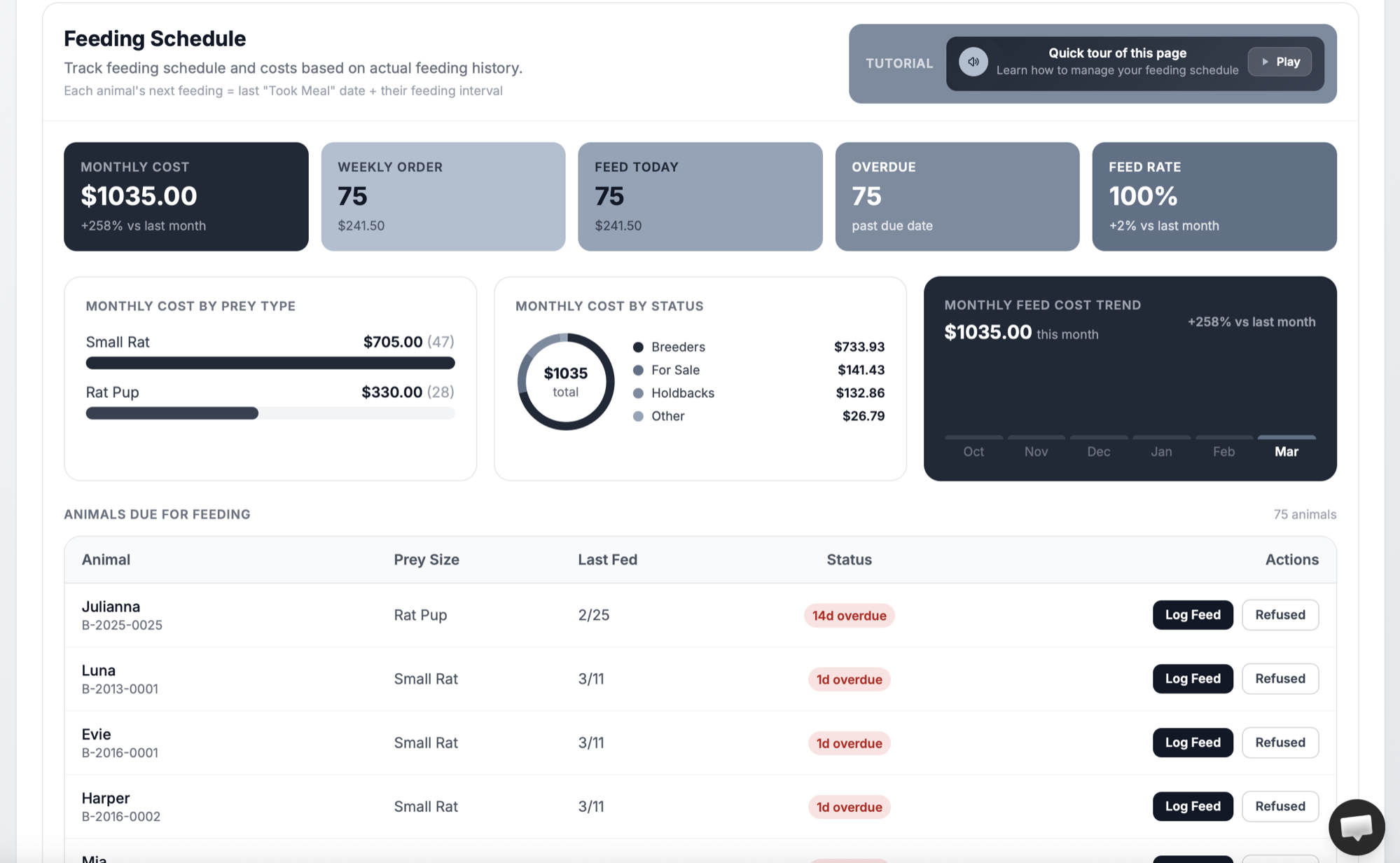
Want every feed logged and managed for you?
Feeding Schedules, Weight Trends, All in One Place
THE RACK logs every feed, every refusal, every prey size. When you are troubleshooting a picky eater or adjusting a schedule, the data is already there.
Get Started FreeWhen Your Ball Python Refuses Food
Normal Fasting Periods
Ball pythons fast. It is part of their biology, not a crisis. Males commonly go off feed for weeks during winter months (November through March) as part of their natural breeding cycle. Females in shed or in the early stages of follicle development also reduce or stop eating. A healthy adult ball python can safely fast for several months without health consequences, as long as it maintains body weight.
Environmental Causes
Before assuming something is wrong with the snake, check the environment:
- Hot side below 88F? Cold snakes will not eat.
- Humidity below 50%? Dehydrated snakes lose appetite.
- No secure hides? Stressed snakes will not eat.
- Recent enclosure change, new location, or excessive handling?
- Prey offered during daylight hours? Try dusk or dark.
Nine times out of ten, feeding refusal traces back to a husbandry issue or a seasonal pattern. Fix the environment before worrying about the snake. For a complete walkthrough, see our guide on ball python not eating.
When to Be Concerned
A fasting ball python in good body condition with stable weight is fine. Be concerned when:
- The snake has lost 10% or more of its body weight during the fast
- The fast has continued for 3+ months in a juvenile or hatchling
- The snake shows other symptoms: lethargy, mucus, wheezing, abnormal posture
- Body condition is visibly declining (spine showing, loose skin)
In these cases, see a reptile veterinarian. Do not attempt force-feeding without professional guidance.
How Much Does It Cost to Feed a Ball Python?
Feeding costs depend on prey size, source (local pet store vs. online bulk supplier), and frequency. Buying frozen rats in bulk from an online supplier is significantly cheaper per item than buying individual rats from a pet store.
A rough estimate: an adult ball python eating a medium rat every two weeks costs in the range of a few hundred dollars per year through a bulk supplier. Hatchlings eating smaller prey cost less in the short term but eat more frequently. As the snake grows, individual prey cost increases but frequency decreases, keeping annual cost relatively stable.
Our feeding cost calculator lets you plug in your snake's weight, prey type, and feeding frequency to get an annual cost projection tailored to your setup.
Cost Tip
Buying frozen rats in bulk from an online supplier can reduce your per-item cost by 40-60% compared to pet store pricing. A chest freezer pays for itself within the first year.
Frequently Asked Questions
Can I Overfeed My Ball Python?
Yes. Overfeeding causes obesity, fatty liver disease, and shortened lifespan. The 10-15% rule and appropriate feeding intervals prevent this. If you see visible fat rolls, scale spread, or a consistently round cross-section, reduce prey size and stretch the schedule. Ball pythons in the wild eat far less frequently than most captive feeding schedules, so erring on the conservative side is fine.
Should I Feed in the Enclosure or a Separate Container?
Feed in the enclosure. The old advice about using a separate feeding container to prevent "cage aggression" has been widely debunked. Moving the snake before and after feeding adds unnecessary stress and increases regurgitation risk. Feed in the enclosure with tongs. The snake will learn to distinguish feeding time from handling time.
How Do I Know If My Ball Python Is Overweight?
Look at the body from above. A healthy ball python has a gently rounded cross-section. An overweight snake appears thick and puffy, with visible scale spread (skin visible between scales). From the side, an overweight ball python loses the defined body-to-tail transition and looks uniformly round. Track weight over time. A sudden upward trend without a corresponding age-related growth phase means the snake is being overfed.
What If My Ball Python Only Eats Live?
Some ball pythons strongly prefer live prey. If the snake consistently refuses frozen/thawed after multiple transition attempts, feeding live is an acceptable option. Supervise every live feeding without exception. Never leave a live rodent unattended in the enclosure. Adult rats can and will bite a snake, and the injuries can be severe.
Built by a Breeder
Feeding Schedules,
Handled For You.
Feeding logs. Weight trends. Cost projections. Bulk feeding tools. THE RACK manages the data so you can focus on the animals.
See THE RACKFree for up to 5 animals. Keeper $10/mo. Breeder $20/mo. 7-day money-back guarantee.