
News / Ball Python Not Eating? 12 Reasons and What to Do
Ball Python Not Eating? 12 Reasons and What to Do
- Check temperatures first, humidity second, hides third, stress fourth. Most refusals trace back to environment.
- A healthy adult ball python can refuse food for weeks to months without health consequences. Weight monitoring is more important than meal counting.
- Seasonal fasting in males during breeding season is normal reproductive behavior, not a husbandry failure.
- Log every feeding attempt. Patterns surface in the data that you will never see from memory alone.
Your ball python pushed the rat away. Or ignored it entirely. Or struck at it and then let go. Feeding refusals are one of the most common concerns for ball python keepers, and they almost always have an explanation. The trick is working through the possibilities in the right order. This guide walks through 12 reasons your ball python is refusing food, starting with the most common culprits and ending with the ones worth a vet visit.
The most common reasons first
1. New Environment Stress
A ball python in a new enclosure needs time to settle. New surroundings, new smells, different temperatures, different light cycles. All of it registers as a threat. Most snakes will not eat during the first one to two weeks after a move. Some take longer.
The fix is patience. Leave the snake alone. Do not handle it. Do not open the enclosure to check on it every few hours. Offer food after seven days. If refused, wait another five to seven days and try again. Most snakes start eating within the first three weeks once they feel secure. Logging each attempt in your feeding logs helps you see the pattern forming instead of relying on memory.
2. Temperatures Are Off
This is the number one husbandry-related cause of feeding refusal. Ball pythons need a hot side surface temperature of 88-92F to digest food properly. If the warm end is too cool, the snake knows it cannot process a meal and will refuse.
Check your temperatures with a digital thermometer or temp gun. Stick-on dial gauges are unreliable. If the hot side reads below 87F, the answer is not a different prey item. It is fixing the heat source.
3. Humidity Is Too Low
Ball pythons need 55-70% humidity as a baseline. A dehydrated snake loses its appetite. If your enclosure sits below 50% consistently, the snake is stressed and uncomfortable before the food even comes out of the freezer.
Switch to a moisture-retaining substrate like coconut fiber or cypress mulch. Correct the environment first. Appetite follows.
4. Shed Cycle
Ball pythons go off feed during the shed cycle. From the first signs of blue, opaque eyes to a completed shed, the process takes 7-14 days. Do not offer food during an active shed. Wait until the shed is complete, give the snake 24-48 hours, and then offer. Most eat readily at this point.
Tired of guessing why your snake skipped a meal?
Log Every Feeding Attempt. See the Pattern.
THE RACK's feeding logs track every offer, refusal, and prey type so you stop guessing and start seeing what is going on.
See THE RACKSeasonal Fasting and Prey Issues
5. Seasonal Fasting (Breeding Season)
Male ball pythons are notorious for going off feed during breeding season, typically October through February. Some males stop eating for three to six months. Females preparing for or recovering from ovulation can do the same.
If your snake is healthy and maintaining weight, this is not an emergency. Monitor weight monthly using weight trends so you can see the trajectory rather than reacting to a single weigh-in.
6. Wrong Prey Type or Size
Some ball pythons are picky about prey. The prey item should weigh roughly 10-15% of the snake's body weight. If you are switching prey types, try warming the item under hot water, drying it thoroughly, and presenting it with tongs in low light.
Perspective on Fasting
A healthy adult ball python can refuse food for weeks to months without health consequences. Weight monitoring is more important than meal counting. If the snake holds weight, it is fine.
7. Too Much Handling
Ball pythons tolerate handling, but too much is stressful. Avoid handling for 48 hours before a feeding attempt and 48 hours after a successful meal.
8. Enclosure Is Too Open
Ball pythons need to feel hidden. Add a second hide on the cool side. Add clutter: fake plants, cork bark, branches. The snake should be able to move from warm to cool without crossing open ground. Security drives appetite.
A ball python refusing food is telling you something. Your job is to listen.
Stress, Illness, and Gravidity
9. Prey Presentation
How you offer the food matters. Warm the prey item in hot water for 10-15 minutes. Dry it off. Dim the lights or wait until evening. Use long tongs and gently move the prey near the snake's hide entrance, mimicking natural movement.
10. Enclosure Location
An enclosure in a high-traffic area, next to a TV, or in direct sunlight creates chronic low-level stress. Move the enclosure to a quieter area of the house.
11. Illness
If you have checked every environmental factor and the snake is still refusing food while losing weight, illness is on the table. Signs to watch for:
- Wheezing or mucus around the nostrils or mouth
- Significant weight loss (10% or more of body weight)
- Lethargy beyond normal resting behavior
- Visible swelling in the jaw or body
- Star-gazing posture or inability to right itself
If any of these are present, stop troubleshooting husbandry and see a reptile veterinarian.
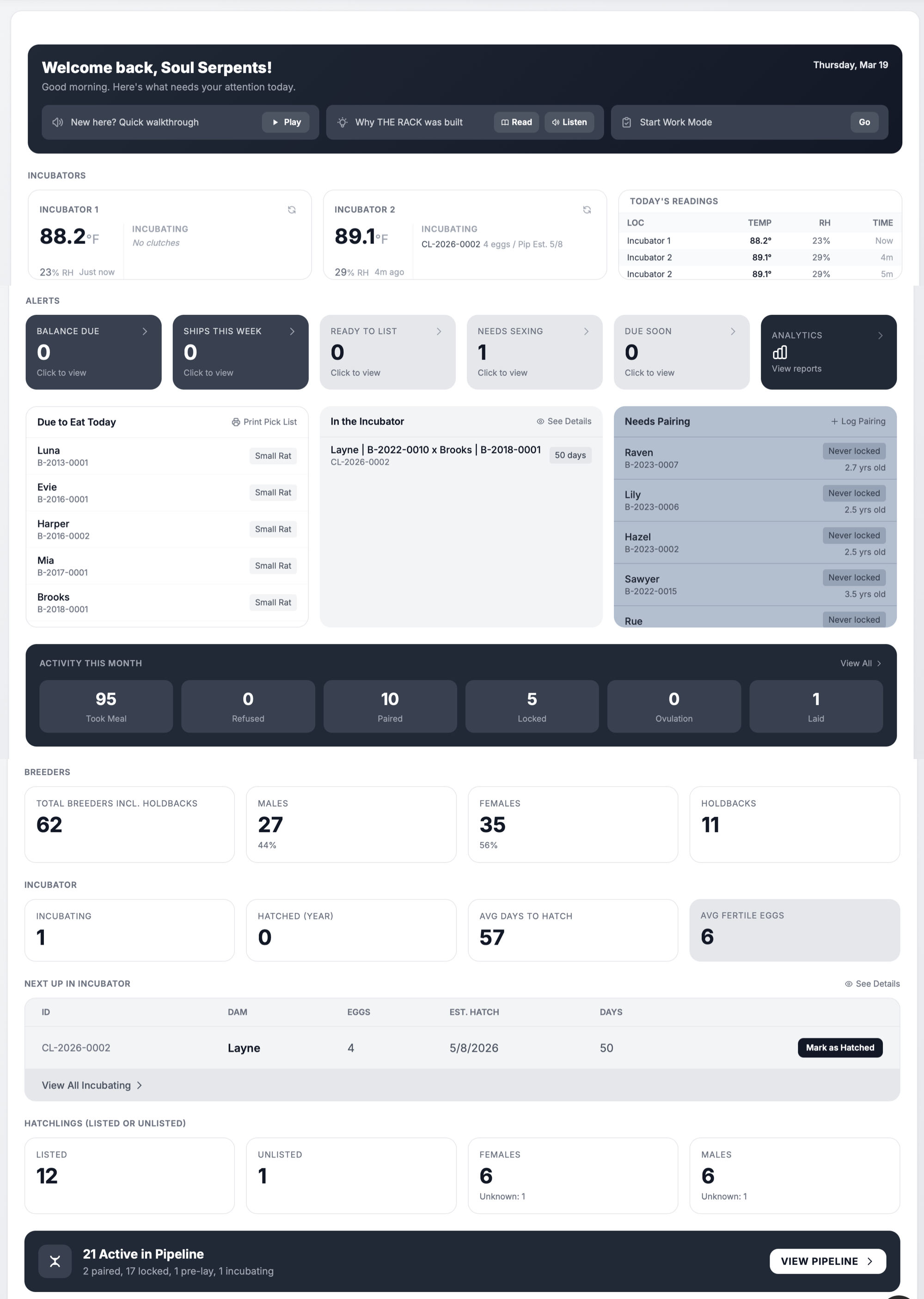
Want this exact system for your collection?
Track Every Feeding. Spot Every Pattern.
THE RACK logs feedings, refusals, prey types, and weight changes for every animal. When something is off, you see it in the data instead of guessing.
See THE RACK12. The Snake Is Gravid
A gravid (egg-carrying) female ball python will often refuse food in the weeks leading up to egg deposition. This is normal. Keep her warm, keep her humid, and offer food again after she lays.
When to worry and when to wait
The decision tree is straightforward. If the snake is maintaining weight, showing normal behavior, and husbandry checks out, you wait. Ball pythons are built for periodic fasting.
You worry when weight drops, when symptoms appear, or when the refusal does not match any of the 12 causes above. In those cases, the snake needs a reptile vet.
The Rule of Thumb
Check temperatures first, humidity second, hides third, stress fourth. If all four are dialed in and the snake still refuses, track weight weekly. Stable weight means the snake is fine. Dropping weight means it is time for a vet.
Building a feeding record
The best way to stop guessing about feeding refusals is to keep a record. Log every feeding attempt: date, prey type, prey size, accepted or refused, and any notes about the snake's behavior. Over time, patterns surface.
Feeding logs in THE RACK make this automatic. Every attempt gets logged with the prey details, and weight trends sit right next to the feeding history.
Built by a Breeder
Stop Guessing.
Start Logging.
Feeding logs. Refusal tracking. Weight trends. Health alerts. THE RACK gives you the data to know what is happening with every animal in your collection.
See THE RACKFree for up to 5 animals. Keeper $10/mo. Breeder $20/mo. 7-day money-back guarantee.