
News / Is Your Female Ball Python Ready to Breed? The ...
Is Your Female Ball Python Ready to Breed? The Complete Pre-Season Checklist
- Minimum breeding weight is 1,500 grams AND at least 3 years old. Both requirements must be met
- The sweet spot for first-time breeding is 1,800-2,000 grams at 3-4 years old
- Watch for behavioral signs: restlessness in fall, receptive body language, and visible ovulation swelling
- Ovulation means eggs in 30-45 days. Start preparing your incubator immediately
- If she is not showing interest by February, wait until next year rather than forcing unsuccessful pairings
You have a beautiful female ball python that has been growing for two years. She looks healthy, she is eating well, and you are starting to wonder if she is ready for her first breeding season. But rushing into breeding too early can cost you thousands in vet bills, lost clutches, and breeding reputation damage that takes years to recover from.
In This Guide
The difference between amateur breeders and professionals is not the quality of their snakes. It is knowing exactly when each female is physiologically and behaviorally ready to produce healthy clutches. Get this wrong, and you are looking at egg binding, follicular stasis, or worse.
The Weight Requirements That Matter
Every breeder throws around different weight numbers, but here is what determines breeding readiness: your female needs to be at least 1,500 grams AND at least 3 years old. The "and" part is crucial because weight without age leads to problems.
Here is why both numbers matter: a 1,200-gram two-year-old might seem ready, but her reproductive system is not fully developed. She lacks the calcium reserves and muscle development needed to produce and lay eggs safely. On the flip side, a 1,800-gram female who is only 18 months old might have the size but not the metabolic maturity.
Pro Tip
Weigh your females monthly starting at 18 months. Consistent weight tracking reveals growth patterns that predict breeding readiness better than single measurements.
The sweet spot for first-time breeding is 1,800-2,000 grams at 3-4 years old. These females have the body condition to handle the metabolic demands of follicle development, egg production, and the 4-month breeding fast that many females go through.
Stop guessing when she's ready
Track Weight. Log Cycles.
Know the Data.
THE RACK's weight tracking shows growth trends over months. When you can see the curve, you know exactly when she is in the breeding window.
See Weight TrackingBehavioral Signs Your Female is Ready
Weight and age get you in the ballpark, but behavioral changes tell you when she is ready to breed. Here are the signs serious breeders watch for:
Pre-Ovulation Behavior Changes (October-December)
Ready females become restless in fall. They cruise their enclosures more, especially at night. Some stop eating voluntarily even before you introduce males.
What to watch for: Increased activity after 6 PM, spending more time on the warm side, and investigating enclosure corners or hiding spots differently.
Receptive Body Language (December-March)
When introduced to males, ready females show specific receptive behaviors: elevating their tails, remaining still when males approach, and positioning themselves for courtship.
The test: Place a proven male in her enclosure for 30 minutes. If she does not flee, hiss, or ball up, she is likely receptive.
Ovulation Signs (January-April)
The holy grail of breeding signs: a visible swelling in the posterior third of her body that lasts 24-48 hours. This is ovulation, and it means viable eggs are developing.
Mark your calendar: Ovulation means eggs in 30-45 days. Start preparing your incubator and nesting box immediately.
Trust the data. Let your female tell you when she's ready.
Timing Your First Breeding Attempt
The calendar matters more than most new breeders realize. Ball pythons are seasonal breeders, and fighting their natural cycle leads to failed pairings and frustrated snakes.
October-November: Start cooling your females to 78-80F at night. This temperature drop triggers hormonal changes that prepare them for breeding season.
December-January: Begin introduction attempts. Start with 3-4 day pairings, watching for receptive behavior. Non-receptive females will actively avoid or display defensively toward males.
February-March: Peak breeding season. Receptive females should be paired continuously until ovulation or until they clearly reject the male.
April-May: Final breeding opportunities. Females that have not shown receptive behavior by April likely will not breed that season.
Timing Reality Check
Females that are not ready will not suddenly become ready mid-season. If she is not showing interest by February, wait until next year rather than forcing unsuccessful pairings.
The Costly Mistakes That Signal She's NOT Ready
Recognizing when a female is not ready saves you months of wasted effort and prevents serious health complications:
Defensive behavior: Females that consistently ball up, hiss, or flee when males are introduced are not ready. This is not shyness; it is their way of saying their body is not prepared for breeding.
Continued regular eating: Ready females often reduce or stop eating during breeding season. A female that maintains her normal feeding schedule throughout winter likely is not cycling.
No physical changes: Ready females show subtle body changes; slightly thicker midsection, changes in skin texture, different positioning in their enclosure. Females that look identical to their summer appearance are not ready.
Setting Up for Breeding Success
Once you have confirmed your female meets all the readiness criteria, preparation becomes crucial. Successful breeders have systems that track every detail.
Document everything: pairing dates, behavioral observations, weight changes, and feeding responses. This data becomes invaluable for timing future breeding seasons and identifying patterns in your specific female's cycle.
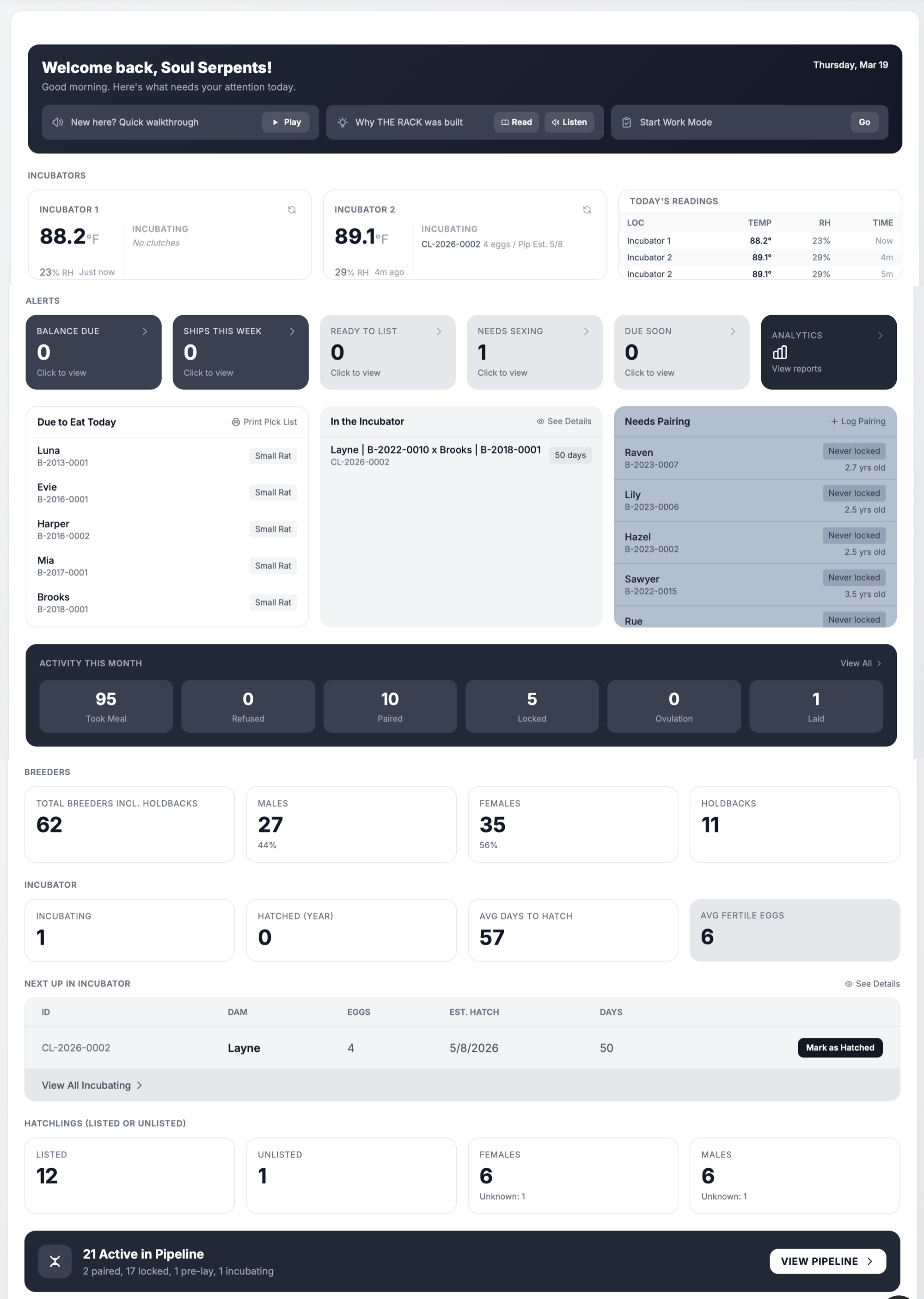
THE RACK handles this tracking automatically, letting you focus on the breeding instead of spreadsheet management. Serious breeders use facility management software because successful breeding is about consistency and data, not guesswork.
Prepare your setup before you start pairing. Have nesting boxes ready, incubation equipment tested, and backup plans for egg-bound females. The best breeding season preparation happens months before you introduce your first male.
Final Check
Before your first pairing: confirm weight, age, and behavioral readiness. Document your female's current condition. One rushed decision can impact her health for years.
The difference between breeders who consistently produce healthy clutches and those who struggle with complications comes down to patience and preparation. Your female will breed when she is truly ready. Forcing the timeline only creates problems that could have been avoided by waiting one more season.
Trust the process, track the data, and let your female tell you when she is ready. The best clutches come from females that were given the time they needed to develop properly.
Ready to track your breeding females?
Weight. Behavior. Ovulation.
All in One System.
THE RACK tracks weight trends, breeding notes, pairing history, and ovulation dates for every female. When the data is clear, the decisions are easy.
See THE RACKContent verified against THE RACK breeding database. Weight thresholds and behavioral markers sourced from active breeder programs. Last reviewed April 2026.
Built by a Breeder
Know When She's Ready.
Track the Data.
Weight tracking. Breeding notes. Ovulation logging. Health history. THE RACK manages your females through every stage of the breeding cycle.
See THE RACKFree for up to 5 animals. Keeper $10/mo. Breeder $20/mo. 7-day money-back guarantee.