
News / How to Get Rid of Snake Mites on Ball Pythons f...
How to Get Rid of Snake Mites on Ball Pythons for Good
- Snake mites are tiny, black parasites found around the eyes, chin, heat pits, and vent. Black specks in the water bowl are a strong indicator.
- Killing mites on the snake is not enough. You need to treat the enclosure and the room simultaneously.
- Repeat treatment every 5-7 days for a minimum of 3 rounds to catch newly hatched nymphs.
- Prevention is a 30-day quarantine for every new animal. No exceptions.
Snake mites are the most common external parasite in captive ball pythons. If you keep snakes long enough, you will deal with them. The good news: mites are completely eradicable with the right protocol. The bad news: half-measures do not work. This guide covers identification, a full eradication protocol, environmental decontamination, and prevention.
How to Identify Snake Mites
Snake mites (Ophionyssus natricis) are tiny, round parasites about the size of a pinhead. They are black or dark red when engorged with blood, and lighter brown or tan when unfed. You will find them in the areas where they can feed most easily.
Where to Look
- Around the eyes. Mites cluster in the soft skin folds around the spectacle (eye cap).
- Under the chin. The labial pits and gular fold are favorite hiding spots.
- In the heat pits. Ball pythons have labial pits along the upper lip. Mites wedge into these.
- Around the vent (cloaca). Another area with soft, accessible skin.
- In the water bowl. Mites drown when the snake soaks. Small black specks in the water bowl are a strong indicator.
Other Signs
- Excessive soaking. A snake sitting in its water bowl for extended periods is often trying to drown mites.
- Rubbing against rough surfaces. The snake is trying to physically remove the parasites.
- Restlessness and frequent movement, especially at night.
- Visible specks on your hands after handling the snake or on white paper towels lining the enclosure.
When you confirm mites on one animal, assume the problem is in the room. Mites move between enclosures. A health log for each animal helps you document when symptoms first appeared and which animals are affected. Health logs in THE RACK let you record these observations per animal, so you have a clear timeline if the issue spreads.
Want health events and quarantine status logged per animal?
Health Logs Keeping Your Facility Clean
THE RACK records health observations, treatment dates, and quarantine status for every animal. When an issue appears, you have a timeline from day one.
See Health ToolsThe Eradication Protocol
Killing the mites on the snake is not enough. You need to kill the mites in the environment simultaneously, or they will reinfest within days. This is a multi-step process and it needs to be thorough.
Isolate Affected Animals
Move confirmed mite-positive animals to a quarantine area. Use bare-minimum setups: paper towel substrate, a water bowl, and a hide. No loose substrate, no decor with crevices.
Treat the Snake
Spray paper towel substrate with Provent-a-Mite (PAM) and let it dry completely before placing the snake on it. The dried residue kills mites on contact. A lukewarm Dawn dish soap soak (a few drops per quart) suffocates active mites on the snake's body. Never spray PAM directly on the snake.
Decontaminate the Enclosure
Remove everything. Discard substrate and porous items. Wash with hot soapy water, rinse, dry. Spray interior with PAM and let dry completely before reassembling.
Decontaminate the Room
Mites travel across surfaces, along rack frames, and between tubs. Wipe down all surfaces with hot soapy water. Treat rack frames, shelving, and the floor around racks with PAM. Mites lay eggs in crevices outside the enclosure.
Repeat Treatment (3 Rounds Minimum)
Mite eggs are resistant to treatment and hatch in 1-5 days. Repeat the full cycle every 5-7 days for 3 rounds to catch newly hatched nymphs before they can mature.
Monitor and Confirm Eradication
After the third treatment, inspect every animal by hand. Place white paper towels in each enclosure for 48 hours and check for specks. Zero mites for 2-3 weeks after the last treatment means the infestation is cleared.
Critical Point
Killing the mites on the snake is only half the battle. The environment holds eggs and nymphs. Treat the enclosure and the room, or the infestation comes back.
Half-measures do not work. Treat the snake, the enclosure, and the room.
Prevention
Mites enter your facility one way: on animals or equipment coming from outside. Prevention is about controlling what comes in and how it is handled before it enters your established collection.
Quarantine Every New Animal
Every new acquisition goes into quarantine for a minimum of 30 days in a separate room or isolated area. Paper towel substrate, minimal furnishing, daily visual inspections. This catches mites (and other health issues) before they reach your established animals. For a full quarantine walkthrough, see our quarantine protocol guide.
Inspect Animals at Expos Before Purchasing
Before buying at an expo, check around the eyes and under the chin. Ask to handle the snake and look for specks on your hands afterward. This is not foolproof, as low-level infestations can be hard to spot, but it catches obvious problems before they enter your vehicle.
Preventive PAM Application
Some breeders apply a light Provent-a-Mite treatment to quarantine enclosures as a standard practice for all new arrivals. The dried residue kills mites the snake might be carrying before they can establish. This is a reasonable precaution, especially during expo season when multiple new animals are entering the facility.
Isolate Shared Equipment
Do not share hooks, tongs, or water bowls between quarantine and established animals without sanitizing first. Mites hitch rides on equipment.
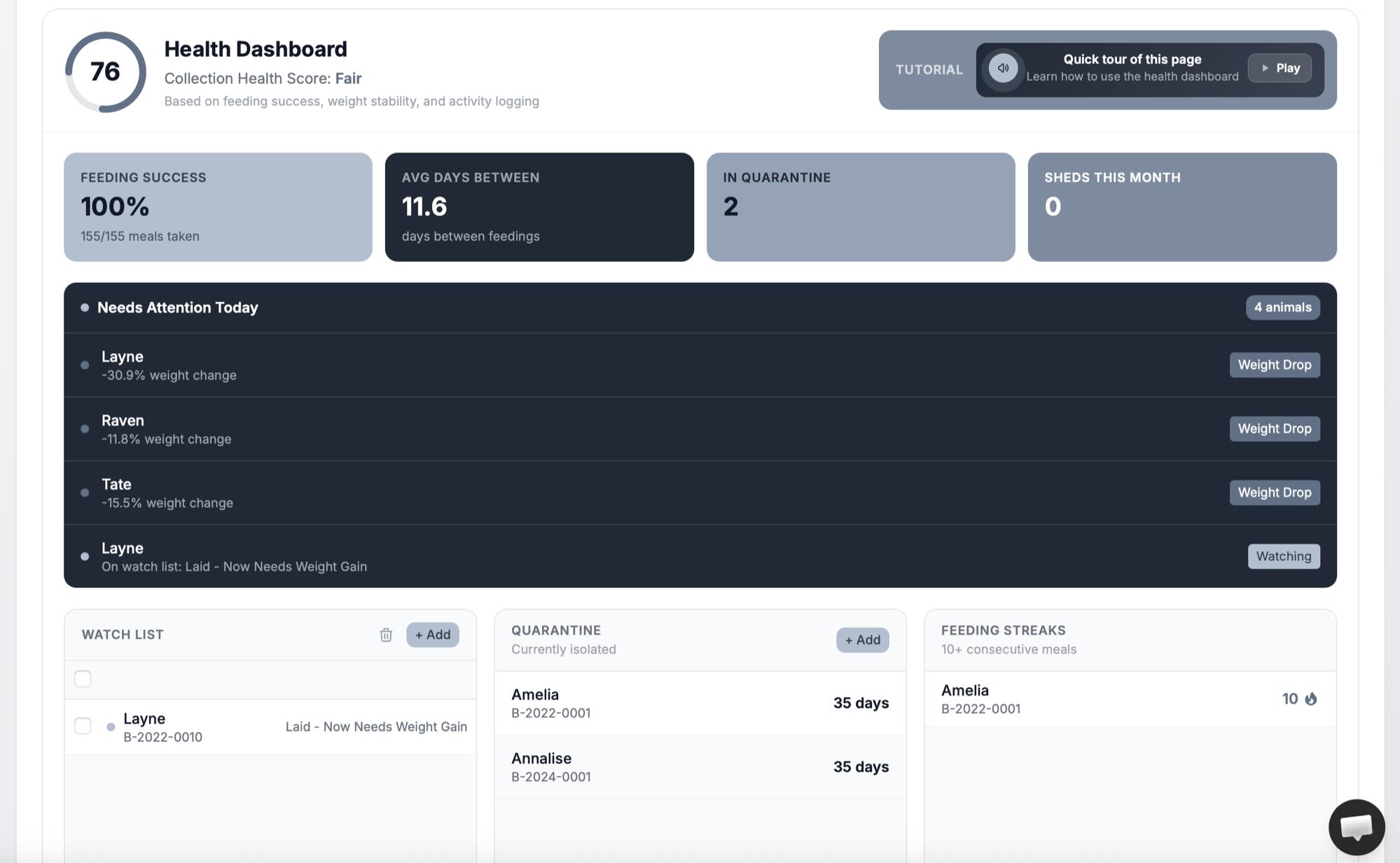
Want quarantine status and treatment dates logged per animal?
Health Records Protecting Your Facility
THE RACK logs health events, treatment protocols, and quarantine timelines for every animal. When something comes up, you know where every animal stands.
See Health ToolsWhen to Call a Vet
Most mite infestations can be handled at home with the protocol above. See a reptile veterinarian if:
- The infestation is severe and the snake is lethargic, dehydrated, or anemic (pale gums, extreme lethargy).
- You have completed 3+ treatment cycles and mites persist.
- The snake has secondary infections from mite damage (open sores, swelling around the eyes).
- You suspect the mites are a different species or are not responding to standard treatment.
A vet can prescribe ivermectin or other prescription-grade treatments for resistant infestations. Do not administer ivermectin without veterinary guidance, as dosing errors can be fatal in reptiles.
Prevention Is Cheaper
A 30-day quarantine protocol for every new animal is the most effective mite prevention strategy. It costs nothing but time and catches problems before they become facility-wide.
Content verified against THE RACK breeding database. Treatment protocols and quarantine timelines sourced from active breeder programs. Last reviewed April 2026.
Built by a Breeder
Health Records,
For Every Animal
Health logs. Treatment dates. Quarantine tracking. Vet visit records. THE RACK keeps your facility's health data organized and accessible.
See THE RACKFree for up to 5 animals. Keeper $10/mo. Breeder $20/mo. 7-day money-back guarantee.